
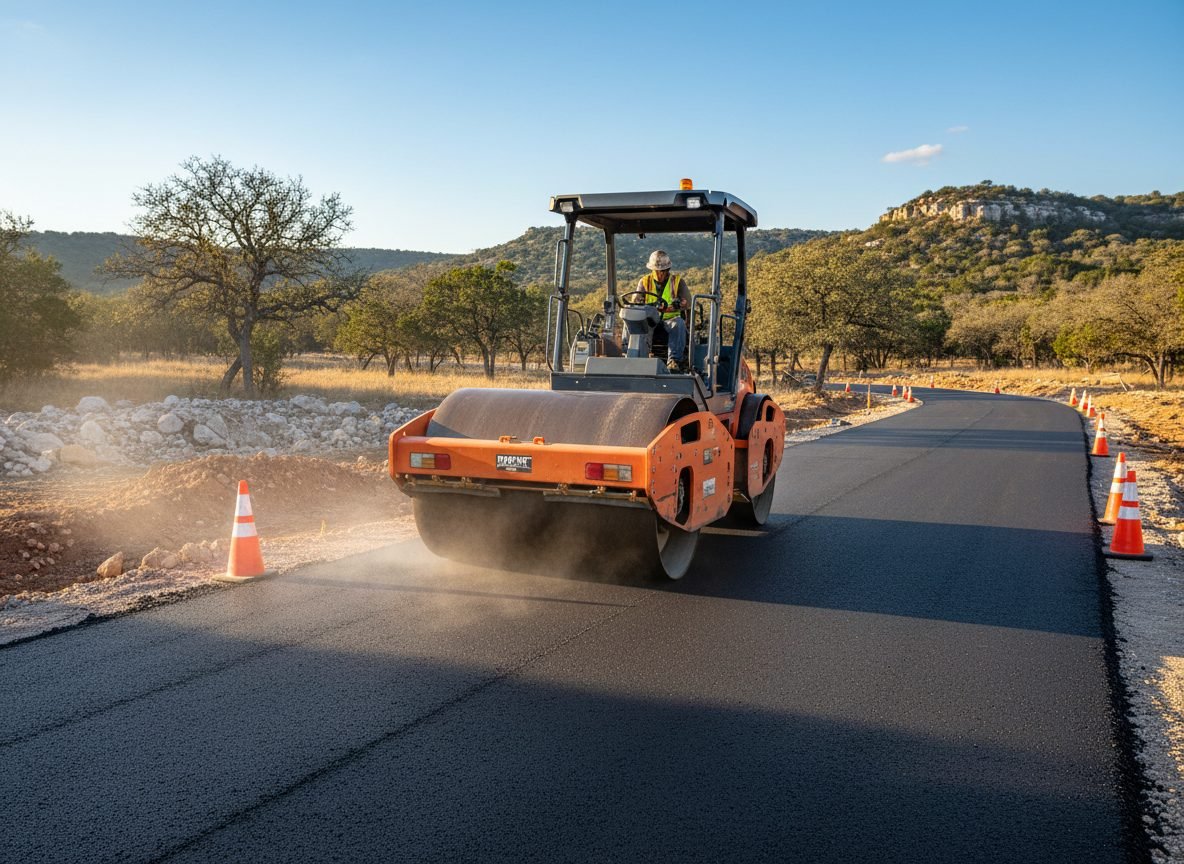
Asphalt Resurfacing in Georgetown, TX
A new lift of hot mix asphalt over pavement that still has a good base. For parking lots, HOA streets, church lots and private drives that have gone grey and rough but do not need to be torn out.
Get a free estimate
Tell us what the pavement is doing. We call back the same business day.
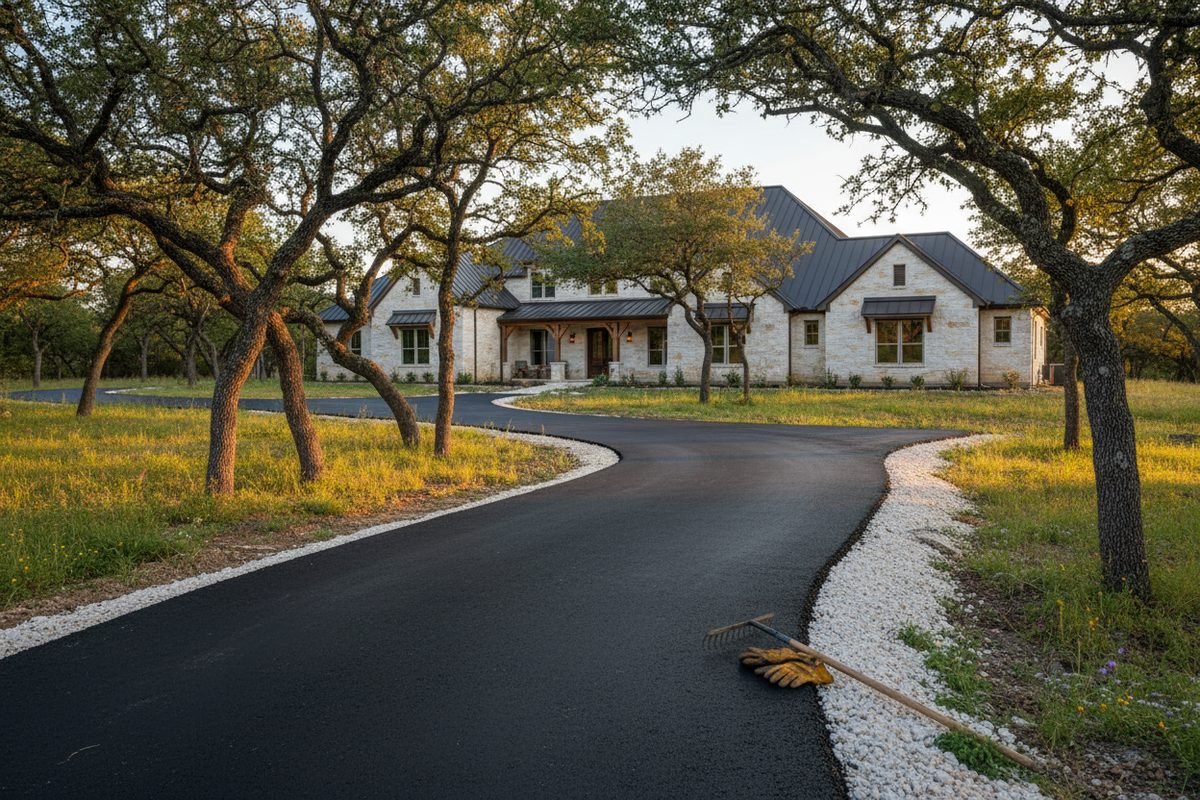
Asphalt Resurfacing, done right for Georgetown ground and heat
An asphalt lot or road in Georgetown usually does not fail all at once. It goes grey in the sun, starts to feel rough under the tires, cracks along the drive aisle, and one day you notice water sitting where it never sat before. If the base under it is still solid, you do not need to tear it out. You need resurfacing: a new lift of hot mix asphalt over the existing pavement.
TXST Paving Company resurfaces parking lots, HOA streets, church lots, driveways and private roads across Georgetown, Round Rock, Leander and the rest of Williamson County. This page covers when an overlay is the right call, how we prep the old surface, and when it is smarter to mill first.
All our road work services
- Asphalt Resurfacing: A new wearing course over sound pavement, with milling and leveling where the old surface needs it.
- Parking Lot Repair: Potholes, drainage failures and base repairs for lots, with patches that match the surrounding surface.
- Asphalt Milling: Cold milling that removes the failed top layer, restores grade and keeps curbs and drains at the right height.
- Speed Bump Installation: Asphalt speed bumps and humps with proper profile, striping and signage for lots and private roads.
Asphalt Resurfacing in Georgetown, explained
 01
When Resurfacing Is the Right Fix
Resurfacing works when the problem is the surface, not the structure. On a site walk we sort the lot into two groups.
- Good candidates: surface oxidation, raveling (loose fine aggregate on the surface), shallow rutting, longitudinal and transverse cracks that are not connected, worn wheel paths, and a surface that has been sealcoated a few times and is now past the point where sealer helps.
- Not candidates: alligator cracking across large areas, pumping (fine mud coming up through cracks after rain), deep ruts that shift under a truck, and potholes that keep coming back in the same spot. These mean the base is gone, and an overlay will crack through in a year or two.
A lot on the east side of Georgetown, out toward Hutto and the Westinghouse Rd corridor, often has a mix of both. The black clay under it moves, and the low spots fail first. The answer there is base repair in the failed areas, then an overlay across the whole lot. We price it that way so you see both parts.
 02
What Our Resurfacing Includes
Surface prep and cleaning
Every overlay starts with a clean surface. We sweep and blow off the lot, pull vegetation out of the cracks, and cut out any area that fails the base test above.
Crack treatment and patching
Wide cracks are cleaned and filled so they do not reflect straight through the new lift. Failed areas get full depth patching before anything goes over them.
Leveling course
Where the old surface has rutted, birdbathed or settled, we lay a leveling course first: a thin lift of fine hot mix that fills the low spots and gives the paver a flat platform. Without it, the overlay follows every dip and water sits in the same places it did before.
Tack coat
A sprayed asphalt emulsion between the old and new asphalt. It is the glue. Skip it, or spray it too light, and the new lift delaminates and slides under braking. We apply it at the right rate and let it break before the paver rolls.
Hot mix overlay
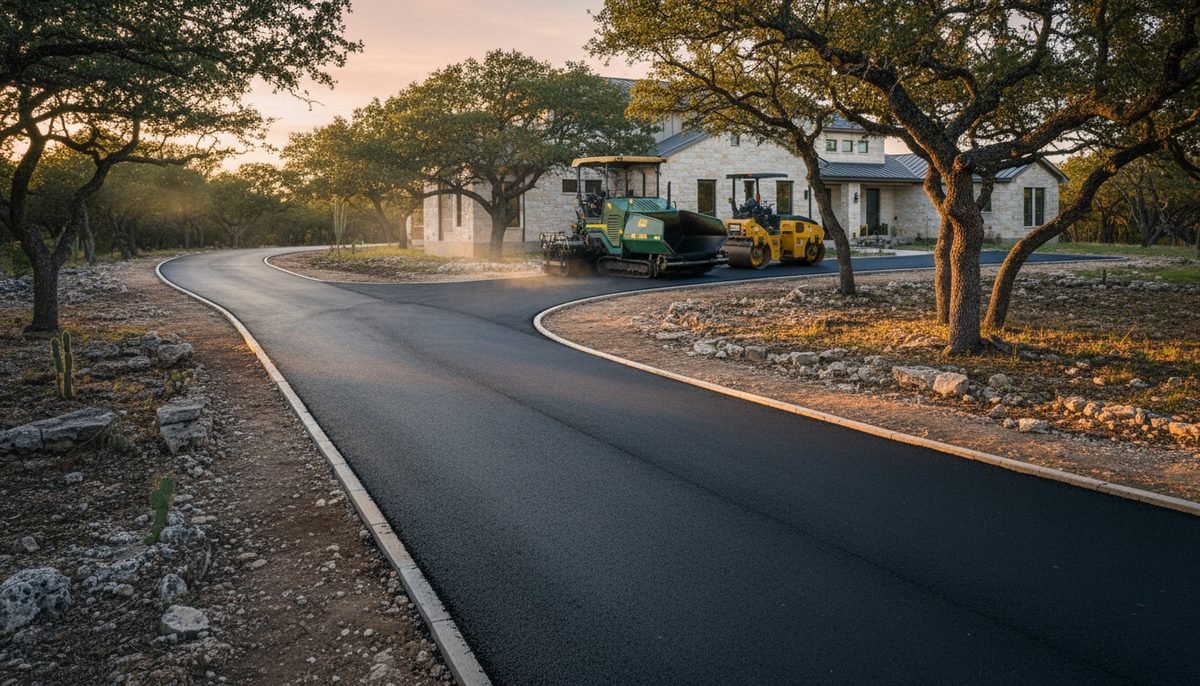
New hot mix laid with a paver at a consistent depth, compacted while hot with a steel drum roller and finished with a pneumatic roller for a tight, sealed mat.
Striping
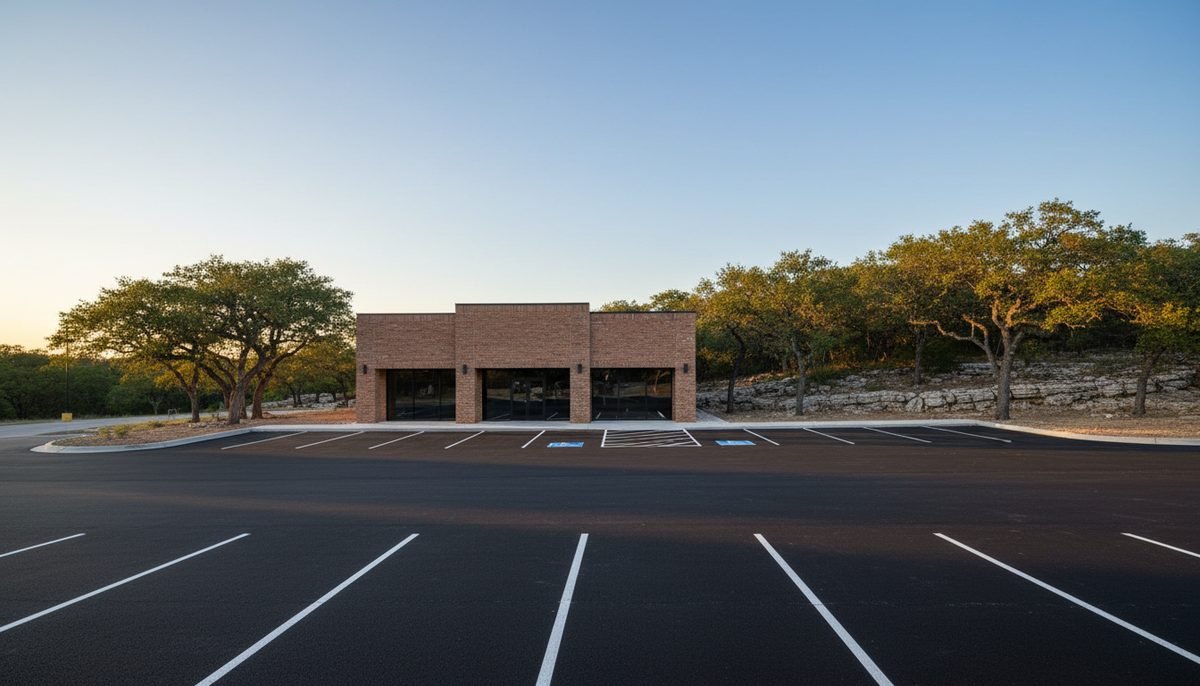
Fresh parking lot striping, accessible spaces and fire lane marking laid out once the surface has cured.
When We Mill Before Overlaying
An overlay adds height. On an open lot or a rural road that is fine. Next to concrete curbs, gutters, storm inlets, dock doors and building thresholds it is not, because the new surface ends up near the top of the curb. That is called losing curb reveal, and it causes three problems: water no longer runs to the gutter, the curb stops working as a wheel stop, and accessible parking spaces can go out of slope tolerance.
So we mill in these cases:
The milling machine takes off a set depth, usually matching the thickness going back down, and the old asphalt is hauled off or reused as base. Our asphalt milling page covers the details. When milling is only needed at the edges, we mill a strip along the curb line and cut butt joints at the transitions so the overlay feathers into the milled edge instead of leaving a lip.
Heat, Sun and Clay: Why Overlays Fail Early Here
Central Texas is hard on asphalt in a specific way. Summers run past 100 degrees for weeks. UV light oxidizes the binder, the surface turns grey and brittle, and fine aggregate starts to ravel out. That is why a lot in Sun City or Teravista paved the same year as one in a cooler state looks a decade older.
The second problem is underneath. East of I-35, Blackland Prairie clay swells in a wet spring and shrinks through a dry August. Edges settle, cracks open, and the overlay cracks over the old crack lines if the base has moved.
How that changes what we do:
Our Resurfacing Process
Resurfacing vs Sealcoating vs Full Replacement
If you are not sure which column your lot is in, that is what the site walk is for. We will tell you straight if a sealcoat will buy you a few more years, or if an overlay would be throwing money on a bad base. Our asphalt maintenance page explains the sealcoat side.
| Question | Sealcoating | Resurfacing (overlay) | Remove and replace |
|---|---|---|---|
| What it fixes | Surface oxidation, minor raveling, appearance | Worn, cracked, rutted surface over a sound base | Failed base, widespread alligator cracking |
| Adds structure | No | Yes, one new lift | Yes, new base and asphalt |
| Changes height | No | Yes, unless milled | No, rebuilt to grade |
| Downtime | Hours | A day or two per phase | Days to weeks |
| Relative cost | Lowest | Middle | Highest |
| Best timing | Every few years as maintenance | When sealer no longer helps but the base is fine | When patching keeps failing |
From first call to finished surface
No mystery and no pressure. You know the scope and the price before a single truck shows up.
Call or text
Reach us at (737) 403-8619 and tell us what you have, a driveway, a parking lot or a private road.
On site measurement
We walk the pavement, measure it, check drainage and base condition and take photos of the problem areas.
Written estimate
You get a clear written estimate with options, usually within a day or two of the visit, free of charge.
The work
Our crew shows up when scheduled, does the job, explains cure times and leaves the site clean.
“As a Realtor serving the Georgetown area, I'm careful about recommending local companies to my clients. TXST Paving has consistently been responsive, professional, and dependable, making the entire process straightforward from the initial conversation through completion.”
“I recently used TXST Paving Company for patching and sealing my driveway. They did a really good job. It makes my customers feel safe getting into my shop. Thank you to the team for working hard even on the holiday!”
“I've used Texas State Paving for the last several years, and each time expectations were met. Great company!”
Asphalt Resurfacing in Georgetown: your questions answered
How thick is an asphalt overlay?
Most parking lot and street overlays go down at one and a half to two inches compacted. Truck routes, dumpster aisles and yards get more. The lift has to be thick enough to compact properly. Go too thin and the mat cools before the roller reaches density, and it ravels within a couple of Georgetown summers. We set the thickness from the traffic and put it in the estimate.
Will the old cracks come back through the new asphalt?
Some can. Cracks over a base that is still moving will reflect through an overlay over time. We reduce that by filling wide cracks first, doing full depth repair on failed areas so the base is stable, and recommending crack filling on the new surface as part of maintenance. An overlay over a sound base holds up well.
How long will my lot be closed?
Usually a day or two per phase. We phase retail and office lots so customers can park on one side while we pave the other. Traffic can return once the asphalt has cooled, typically the same day. Striping goes on after the surface has cured, so the finished layout comes a little later.
Can you resurface a residential driveway?
Yes, as long as the base is sound. A driveway in Serenada or Sun City that has gone grey and cracked but does not sink under a vehicle is a good overlay candidate. If it has alligator cracking or holds water, we will recommend repair or a full driveway repave instead. We tell you which during the estimate.
Should I sealcoat after resurfacing?
Yes, but not right away. New asphalt needs time to cure and let the light oils come off, usually six months to a year in our climate. After that, a sealcoat slows UV oxidation and keeps the surface black and flexible. Sealing every few years after that is the cheapest way to make the overlay last.
Work that pairs well with asphalt resurfacing
 01
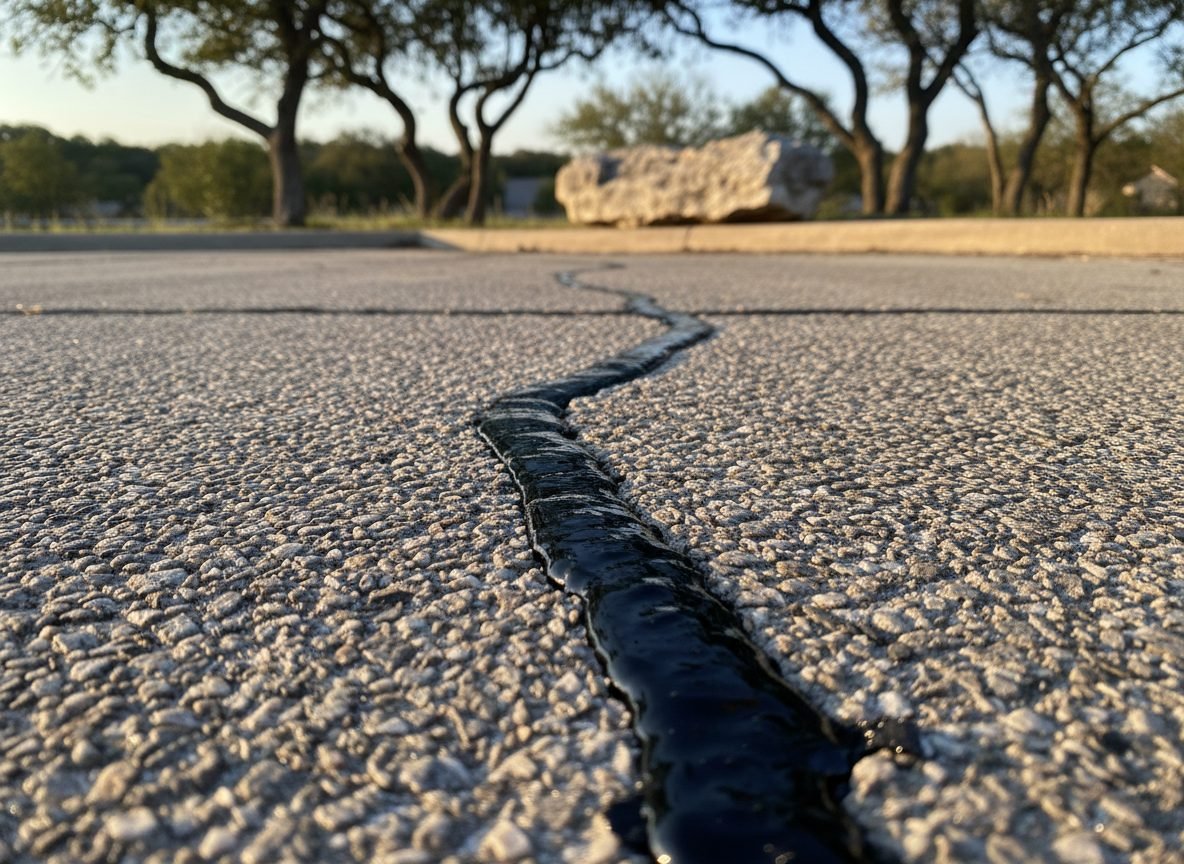
Parking Lot Repair
Potholes, drainage failures and base repairs for lots, with patches that match the surrounding surface.
Learn more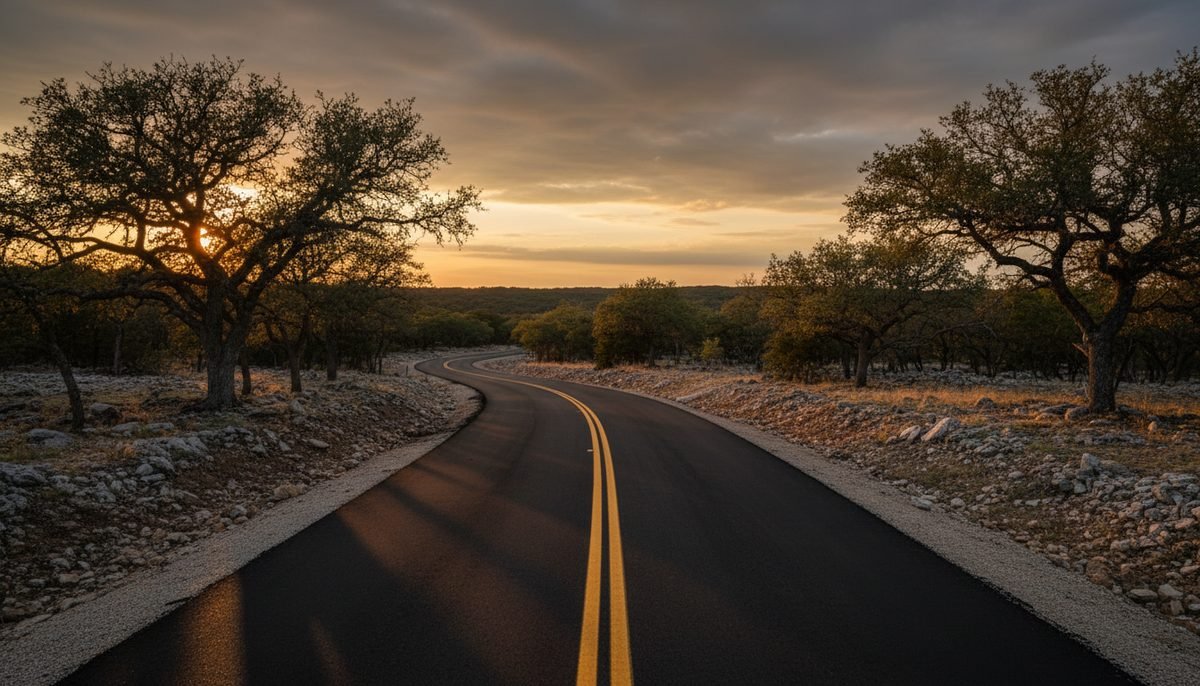 02
Asphalt Milling
Cold milling that removes the failed top layer, restores grade and keeps curbs and drains at the right height.
Learn more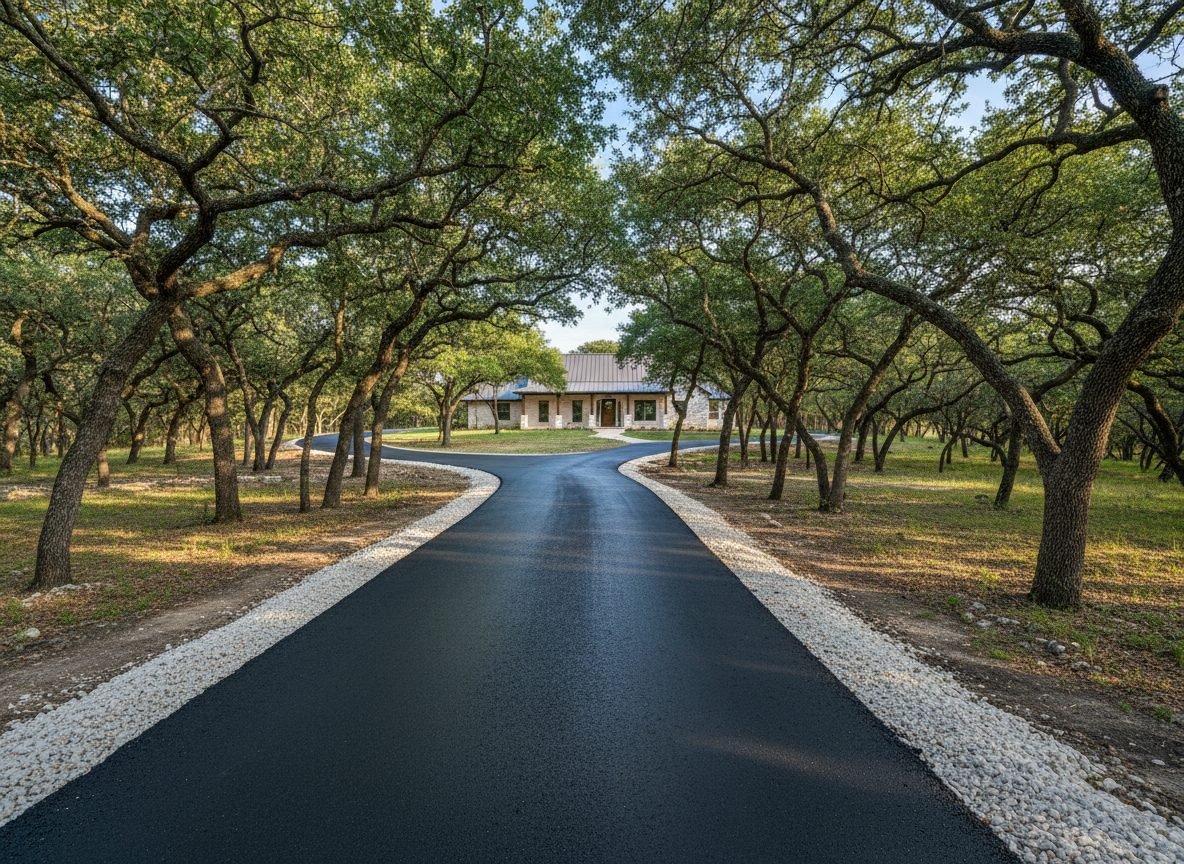 03
Speed Bump Installation
Asphalt speed bumps and humps with proper profile, striping and signage for lots and private roads.
Learn moreWant a straight answer on asphalt resurfacing?
Call or text and we will come out, measure and put a fair price in writing.