
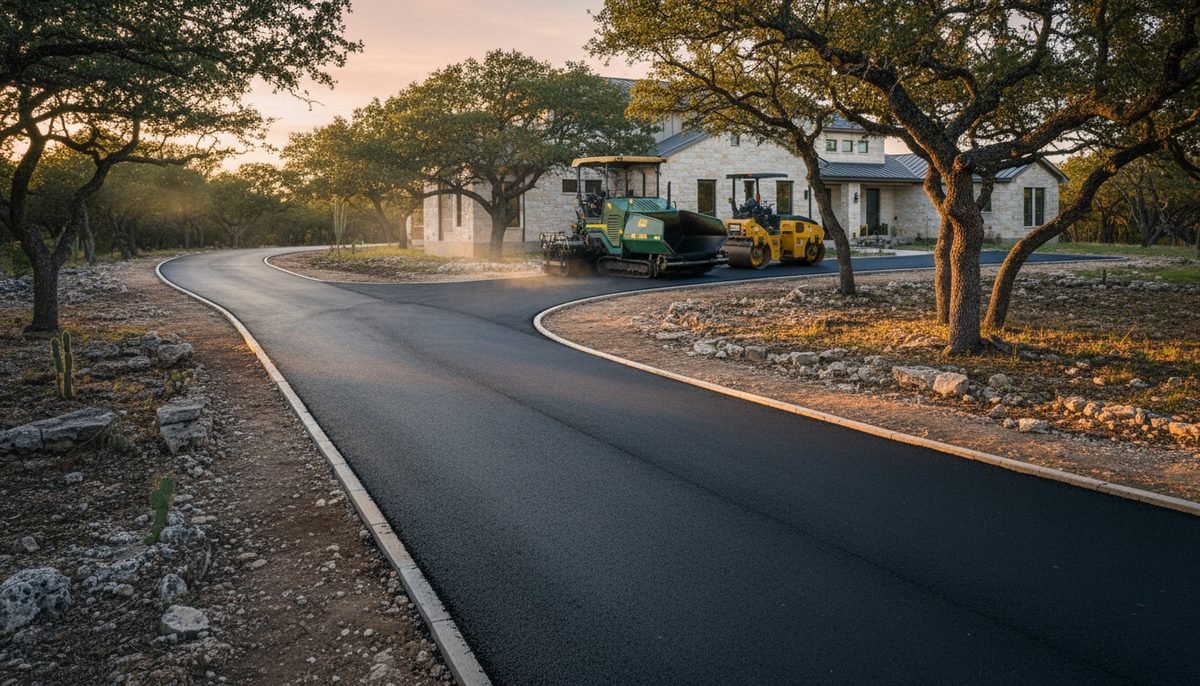
Concrete to Asphalt Conversion in Georgetown, TX
Turn a broken-up concrete lot or driveway into smooth hot mix asphalt. Removal or overlay, base correction and new pavement handled by one crew.
Get a free estimate
Tell us what the pavement is doing. We call back the same business day.
Concrete to Asphalt Conversion, done right for Georgetown ground and heat
Concrete lasts a long time, right up until it does not. Around Old Town Georgetown, along the older stretches of Williams Drive and on ranch driveways out toward Jarrell and Salado, there are concrete lots and drives poured decades ago that are now a grid of failed joints, rocking slabs and patched holes. Every repair is a new patch in a different color, and the next slab goes the following year.
At some point the honest answer is to stop patching and convert. TXST Paving Company removes or overlays failed concrete and replaces it with hot mix asphalt, usually at a lower cost and a faster turnaround than pouring new concrete. We serve Georgetown, Round Rock, Taylor, Liberty Hill and the rest of Williamson County. Call (737) 403-8619 for a free written estimate.
All our concrete services
- Curb & Gutter Repair: Broken, heaved or crumbling curb and gutter removed and repoured so water goes where it should.
- Handicap Ramp Installation: ADA and Texas Accessibility Standards compliant ramps, landings and detectable warnings.
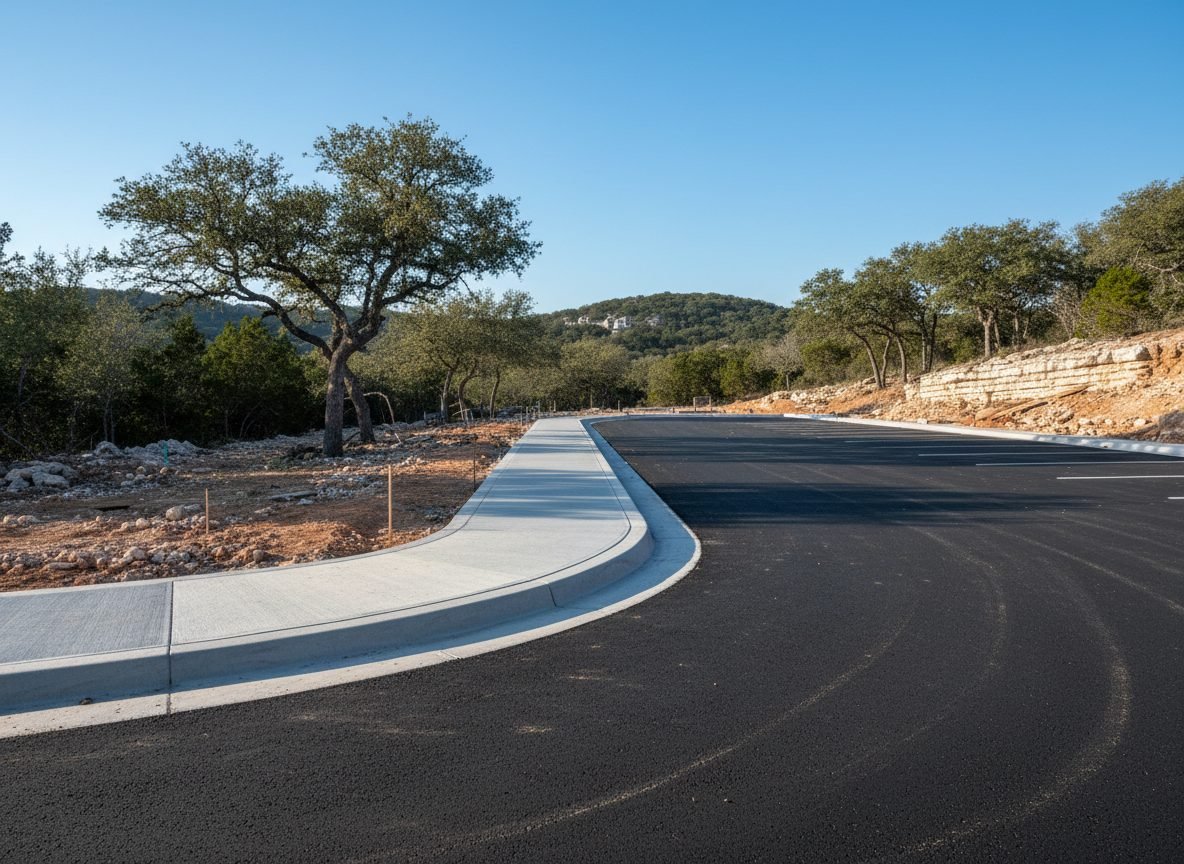
- Concrete to Asphalt Conversion: Failing concrete drives and lots removed or overlaid with asphalt at a lower cost and faster turnaround.
Concrete to Asphalt Conversion in Georgetown, explained
When Converting to Asphalt Makes Sense
We do not convert every concrete lot we look at. These are the signs it is time:
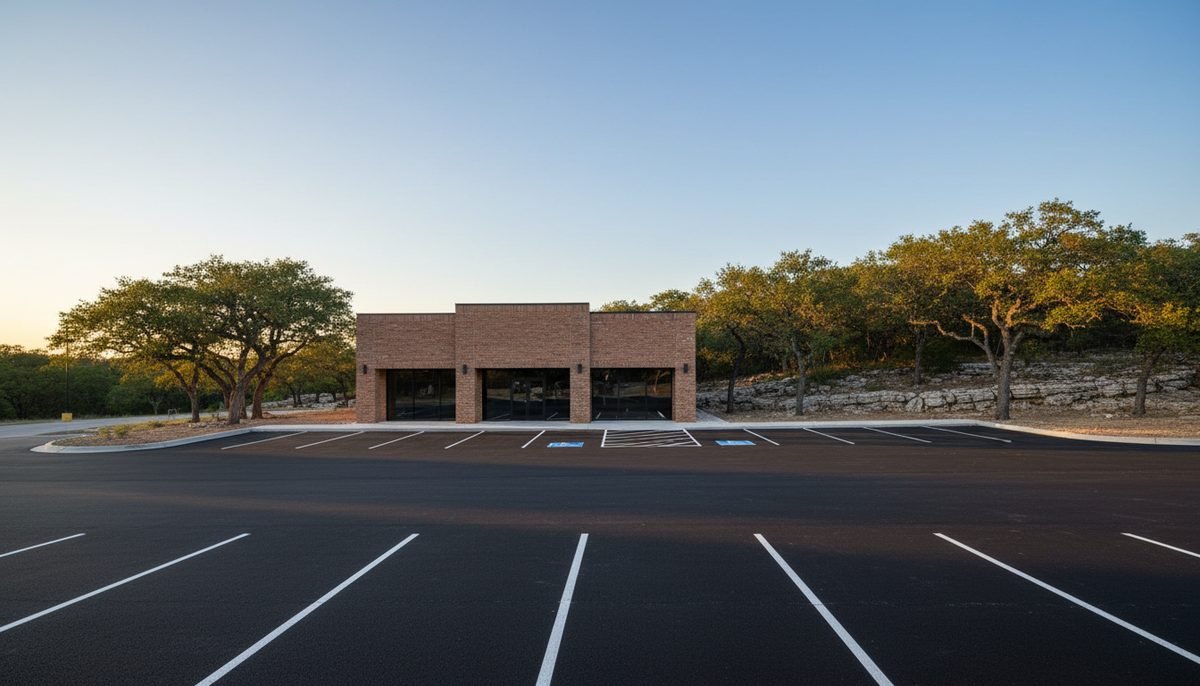
For an owner in Georgetown, the appeal is simple. Asphalt goes down in days, not weeks. It can be driven on the next day. It costs less per square foot than a new concrete pour, and when it wears in ten or fifteen years it can be resurfaced rather than replaced.
 02
Remove and Replace vs. Overlay: The Ways to Convert
Full removal
Break out and haul off the concrete, correct the subgrade and base, then pave new asphalt at full depth. This is the right call when the base has failed, when slabs are rocking, when grades need to change for drainage, or when the finished surface has to match existing curbs and doors. It costs more up front but gives you a pavement with a known base under it.
Rubblize and pave
Instead of hauling the concrete away, a rubblizing or crack-and-seat process breaks the slabs into small interlocking pieces in place. The fractured concrete becomes a stiff base layer, and we pave hot mix directly over it. It saves the haul-off, saves time, and works well when the slabs are sound but the joints and surface have failed. It does not fix a base that has washed out, and it raises the finished grade by the thickness of the new asphalt.
Straight overlay
Paving asphalt over intact concrete without breaking it. We rarely recommend this. Every concrete joint will reflect through the asphalt as a crack within a couple of seasons. It has a place on very stable, lightly loaded concrete where the owner accepts reflective cracking and plans on crack filling as maintenance.
 03
What Georgetown Soil Does to the Decision
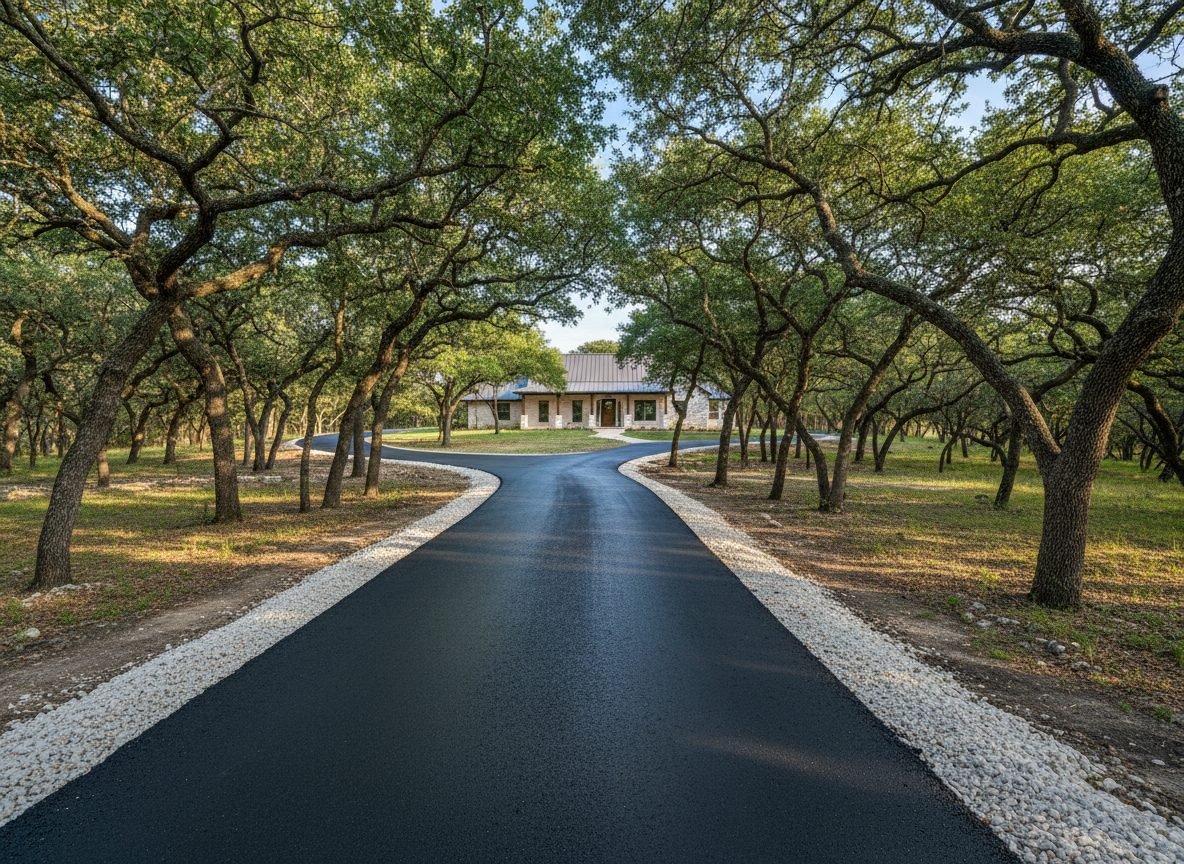
The base under the old concrete decides which method we recommend, and the base here depends on which side of I-35 you are on.
East of the interstate, in Teravista, along Westinghouse Road and out toward Hutto and Taylor, concrete sits on Houston Black clay. Decades of shrink and swell have usually voided the base under the slab edges. That is why the slabs rock. Rubblizing over a voided base gives you an uneven layer, so on these sites we more often remove, rework the subgrade, add compacted flex base and pave. The good news is that asphalt is flexible and handles clay movement better than rigid concrete did.
West of I-35, near Serenada, Berry Creek and Lake Georgetown, concrete tends to sit on limestone or caliche that has not moved much. Slabs there fail from age and surface wear more than from base loss, which makes rubblizing a strong option. It also avoids excavating into rock.
Either way, drainage gets rebuilt during a conversion. Central Texas storms will find any low spot, and standing water is what kills an asphalt base. We set new grades to drain and confirm them before paving.
Our Conversion Process
A typical commercial lot conversion runs from a few days to a couple of weeks depending on size and how much base work is needed. We can phase it so part of the lot stays open.
Conversion Options Compared
| Factor | Full removal and repave | Rubblize and pave | Straight overlay |
|---|---|---|---|
| Fixes a failed base | Yes | No | No |
| Grade can be changed | Yes | Limited | No, grade rises |
| Reflective cracking risk | None | Low | High |
| Haul-off and disposal | Full | Minimal | None |
| Time on site | Longest | Medium | Shortest |
| Relative cost | Highest | Middle | Lowest |
| Best fit in Georgetown | Clay sites east of I-35, rocking slabs | Limestone sites, sound slabs with bad joints | Rarely recommended |
When the Concrete Should Stay
Some concrete is doing a job asphalt cannot. We leave it, or repour it, in these situations:
A good conversion often ends up as an asphalt lot with concrete kept exactly where it earns its place. Our concrete contractor page covers the pads, aprons and curbs we pour alongside the new asphalt.
From first call to finished surface
No mystery and no pressure. You know the scope and the price before a single truck shows up.
Call or text
Reach us at (737) 403-8619 and tell us what you have, a driveway, a parking lot or a private road.
On site measurement
We walk the pavement, measure it, check drainage and base condition and take photos of the problem areas.
Written estimate
You get a clear written estimate with options, usually within a day or two of the visit, free of charge.
The work
Our crew shows up when scheduled, does the job, explains cure times and leaves the site clean.
“As a Realtor serving the Georgetown area, I'm careful about recommending local companies to my clients. TXST Paving has consistently been responsive, professional, and dependable, making the entire process straightforward from the initial conversation through completion.”
“I recently used TXST Paving Company for patching and sealing my driveway. They did a really good job. It makes my customers feel safe getting into my shop. Thank you to the team for working hard even on the holiday!”
“I've used Texas State Paving for the last several years, and each time expectations were met. Great company!”
Concrete to Asphalt Conversion in Georgetown: your questions answered
Is asphalt really cheaper than repouring concrete?
Per square foot, new asphalt is usually well under the cost of new concrete, and it goes down in a fraction of the time. Rubblizing in place lowers the cost further by cutting out demolition and haul-off. The trade is a shorter surface life before resurfacing, which is why we pair conversions with a sealcoating schedule. We give you real numbers for your lot in the written estimate.
What is rubblizing?
Rubblizing breaks the existing concrete into small interlocking pieces in place, typically a few inches across, using a resonant breaker or a multi-head breaker. The fractured concrete is then compacted and becomes the base for new hot mix asphalt. It removes the joints that would otherwise reflect through as cracks, saves the haul-off, and works best when the concrete is sound but the surface and joints have failed.
How long does a conversion take?
A residential concrete driveway can usually be removed and repaved in two or three days. A commercial lot depends on size, how much base work the clay has made necessary, and whether we are rubblizing or hauling off. Most run from a few days to about two weeks. The new asphalt can take cars the next day, and we phase larger lots so part stays open.
Will the old concrete joints crack through the new asphalt?
If you pave straight over intact concrete, yes, usually within two or three seasons. That is called reflective cracking. Rubblizing eliminates the joints, and full removal eliminates the concrete. Either method avoids the problem. On the rare overlay we do agree to, we tell the owner up front to budget for crack filling as routine maintenance.
What happens to my curbs, ramps and dumpster pad?
Sound curb stays and the new asphalt is paved to it. Ramps and landings stay if they meet the accessibility standards and are rebuilt if they do not. Dumpster pads and truck aprons stay as concrete because asphalt would rut under refuse trucks. If any of that concrete has failed, we replace it during the same project so the finished lot has concrete only where it earns its place.
Work that pairs well with concrete to asphalt conversion
01Curb & Gutter Repair
Broken, heaved or crumbling curb and gutter removed and repoured so water goes where it should.
Learn more02Handicap Ramp Installation
ADA and Texas Accessibility Standards compliant ramps, landings and detectable warnings.
Learn more03Asphalt Paving
New hot mix asphalt for driveways, lots and private roads, built on compacted base that handles Williamson County clay.
Learn more
Want a straight answer on concrete to asphalt conversion?
Call or text and we will come out, measure and put a fair price in writing.