
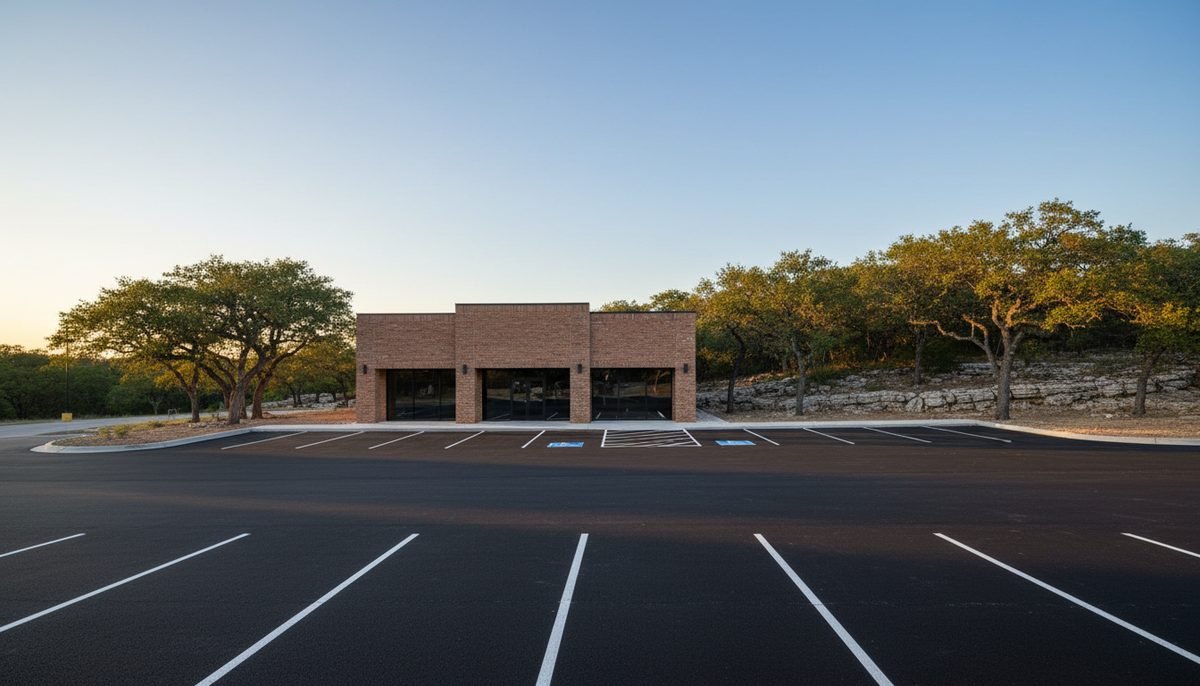
Handicap Ramp Installation in Georgetown, TX
ADA and Texas Accessibility Standards compliant concrete ramps for parking lots, entrances and sidewalks. Built to pass inspection the first time.
Get a free estimate
Tell us what the pavement is doing. We call back the same business day.
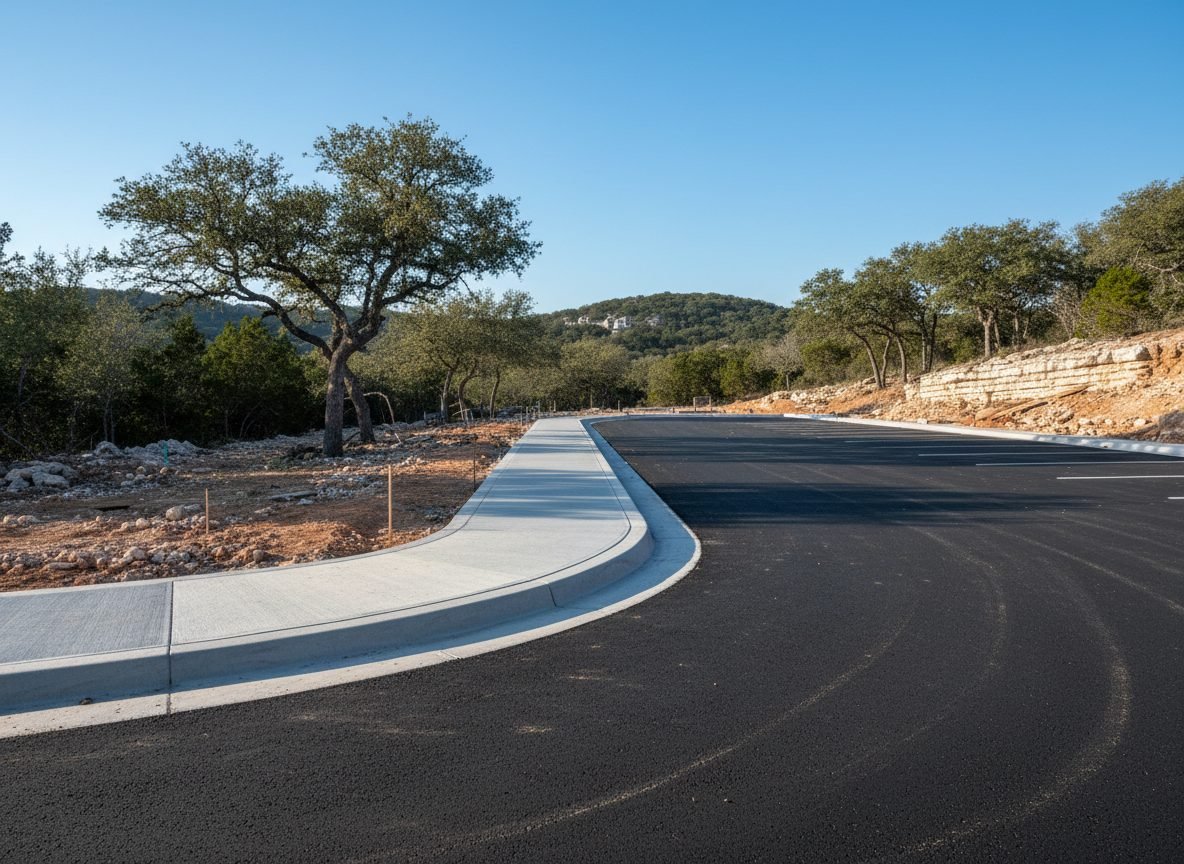
Handicap Ramp Installation, done right for Georgetown ground and heat
A ramp that looks fine can still fail. A running slope of 1:10 instead of 1:12, a cross slope a hair over 2 percent, a landing that is a few inches short, no detectable warning surface at the street. Any one of those is a finding on a TDLR inspection and a liability for the owner. Georgetown has grown fast, and a lot of the ramps on older lots around Old Town and Williams Drive were built before anyone was measuring.
TXST Paving Company builds and rebuilds accessible ramps for commercial properties across Georgetown, Round Rock, Cedar Park and Williamson County. We pour them to the Texas Accessibility Standards, tie them into the accessible parking and striping, and give you the measurements to prove it. Call (737) 403-8619 to schedule a site visit.
All our concrete services
- Curb & Gutter Repair: Broken, heaved or crumbling curb and gutter removed and repoured so water goes where it should.
- Handicap Ramp Installation: ADA and Texas Accessibility Standards compliant ramps, landings and detectable warnings.
- Concrete to Asphalt Conversion: Failing concrete drives and lots removed or overlaid with asphalt at a lower cost and faster turnaround.
Handicap Ramp Installation in Georgetown, explained
What ADA and the Texas Accessibility Standards Require
Texas enforces accessibility through the Texas Accessibility Standards, administered by the Texas Department of Licensing and Regulation. TAS tracks the 2010 ADA Standards closely, with a few Texas specifics. The numbers that matter on a ramp:
Projects with a total construction cost at or above the threshold set by the Texas Architectural Barriers Act must be registered with TDLR, have plans reviewed by a Registered Accessibility Specialist, and pass an inspection after completion. Smaller jobs are not exempt from the standards, they just skip the formal review. We build every ramp the same way either way.
 02
Ramps We Build
Curb ramps at accessible parking
The most common request. The ramp connects the access aisle beside a van or standard accessible space to the sidewalk or entrance. We build them so the access aisle itself stays under 2 percent slope in both directions, which is where most lots fail.
Entrance and sidewalk ramps
Ramps up to a raised storefront walk or a building entry, with landings, handrails where the rise calls for them, and edge protection.
Crosswalk and street curb ramps
Perpendicular or parallel curb ramps at crosswalks and drive aisles, with detectable warning surfaces set in the fresh concrete.
Ramp rebuilds
Tearing out a ramp that failed inspection or was built to no standard at all, and rebuilding it to spec. Often the fix means moving the ramp to where the grade actually allows a 1:12 slope.
Accessible route work
The ramp is one link. We also regrade sidewalk sections, pour level landings, and coordinate accessible space marking and signage so the whole route from the parking space to the door complies.
 03
Building Ramps on Georgetown Ground
Slope compliance is a matter of a fraction of an inch, and Central Texas ground does not sit still. On the Blackland clay east of I-35, a landing that was dead level in June can tilt past 2 percent after a wet fall. We put ramps and landings on compacted flex base, tie them to adjacent concrete with dowels, and reinforce the slab so it moves as a unit rather than folding at a joint.
Heat is the other issue. A ramp poured on a 102 degree afternoon in Sun City sets fast and cracks early unless it is cured properly. We schedule pours for the cooler part of the day and use curing compound.
Drainage is a design problem on ramps. Water must not pond on the landing or the ramp surface, but you also cannot slope a landing to drain it. We solve that with the surrounding grade, so water sheds away from the route rather than across it. Ramps at Wolf Ranch and along University Avenue, where lots were graded quickly during construction, often need this rework.
Our Ramp Installation Process
Ramp Options at a Glance
| Option | Best for | Watch out for |
|---|---|---|
| Poured concrete curb ramp | Parking lots, sidewalks, crosswalks | Needs enough run length to hit 1:12. Permanent and low maintenance. |
| Concrete ramp with handrails | Entrances with more than 6 inches of rise | Handrail extensions and landings add footprint. |
| Asphalt ramp | Temporary access during construction | Hard to hold precise slopes, softens in summer heat. Not our recommendation for a permanent accessible route. |
| Modular metal ramp | Short-term or leased buildings | Still must meet slope and landing rules. Not a substitute at parking spaces. |
| Regrading the parking area instead | Lots where the sidewalk is only slightly above the pavement | Sometimes a flush transition beats a ramp. We will tell you if it does. |
 06
Who We Build Ramps For
Medical and dental offices, churches, retail centers, apartment communities, schools and municipal facilities in Georgetown, Round Rock, Leander and Pflugerville. Ramp work usually comes with a parking lot striping update, and often with curb and gutter repair at the same time. Our concrete contractor page covers the other flatwork we do.
We serve Georgetown, including Sun City, Wolf Ranch, Teravista and the Williams Drive corridor, plus Round Rock, Cedar Park, Leander, Hutto, Pflugerville, Taylor, Liberty Hill, Jarrell, Salado and north Austin.
From first call to finished surface
No mystery and no pressure. You know the scope and the price before a single truck shows up.
Call or text
Reach us at (737) 403-8619 and tell us what you have, a driveway, a parking lot or a private road.
On site measurement
We walk the pavement, measure it, check drainage and base condition and take photos of the problem areas.
Written estimate
You get a clear written estimate with options, usually within a day or two of the visit, free of charge.
The work
Our crew shows up when scheduled, does the job, explains cure times and leaves the site clean.
“As a Realtor serving the Georgetown area, I'm careful about recommending local companies to my clients. TXST Paving has consistently been responsive, professional, and dependable, making the entire process straightforward from the initial conversation through completion.”
“I recently used TXST Paving Company for patching and sealing my driveway. They did a really good job. It makes my customers feel safe getting into my shop. Thank you to the team for working hard even on the holiday!”
“I've used Texas State Paving for the last several years, and each time expectations were met. Great company!”
Handicap Ramp Installation in Georgetown: your questions answered
What slope does a handicap ramp have to be?
The running slope can be no steeper than 1:12, which is 1 inch of rise for every 12 inches of length, or about 8.33 percent. Cross slope is limited to 1:48, about 2 percent. A standard 6 inch curb needs at least 6 feet of ramp run. Landings at the top and bottom must be level, and if the rise is more than 6 inches, handrails are required on both sides.
Do I need a TDLR inspection for my ramp?
It depends on the total construction cost of the project. Texas requires projects at or above the state threshold to be registered with the Texas Department of Licensing and Regulation, reviewed by a Registered Accessibility Specialist, and inspected after completion. Smaller ramp jobs skip the formal process but still have to meet the same standards. We build every ramp to spec and give you the slope readings regardless.
Can you fix a ramp that failed inspection?
Yes, and it is a common call. Most failures are slope, landing size or missing detectable warnings. A ramp that is too steep cannot be patched into compliance, it has to be rebuilt, and often that means relocating it to where there is enough run length. We survey first, show you where a compliant ramp fits, and rebuild it to pass.
What are the bumpy yellow panels at the bottom of a ramp?
Those are detectable warning surfaces, usually called truncated domes. They warn people with visual impairments that they are about to enter a vehicular area. They are required where a curb ramp meets a street or drive aisle, must cover the full ramp width and extend 24 inches in the direction of travel, and must contrast with the surrounding surface. We set cast-in-place panels in the wet concrete.
Can the ramp be asphalt instead of concrete?
It can, but we do not recommend it for a permanent accessible route. Asphalt softens in Georgetown summers and is hard to hold to a 2 percent cross slope tolerance during placement. It also settles on clay. Concrete holds its shape, takes detectable warning panels cleanly, and is what inspectors expect to see. We use asphalt only for temporary access during construction.
Work that pairs well with handicap ramp installation
01Curb & Gutter Repair
Broken, heaved or crumbling curb and gutter removed and repoured so water goes where it should.
Learn more02Concrete to Asphalt Conversion
Failing concrete drives and lots removed or overlaid with asphalt at a lower cost and faster turnaround.
Learn more03Asphalt Paving
New hot mix asphalt for driveways, lots and private roads, built on compacted base that handles Williamson County clay.
Learn more
Want a straight answer on handicap ramp installation?
Call or text and we will come out, measure and put a fair price in writing.