
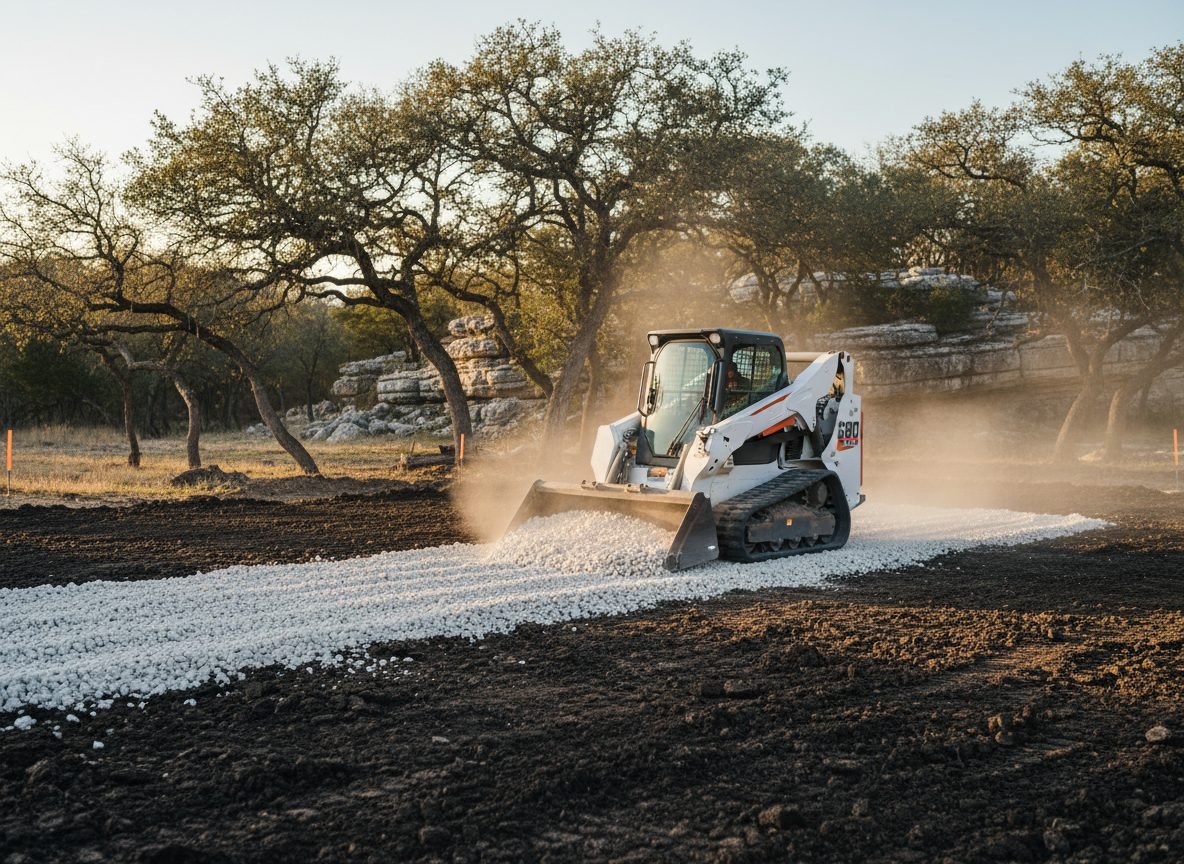
Grading and Leveling in Georgetown, TX
Rough and fine grading, swales, crown and cross slope, laser grading and compacted base rock, built so water leaves the pavement instead of sitting on it.
Get a free estimate
Tell us what the pavement is doing. We call back the same business day.
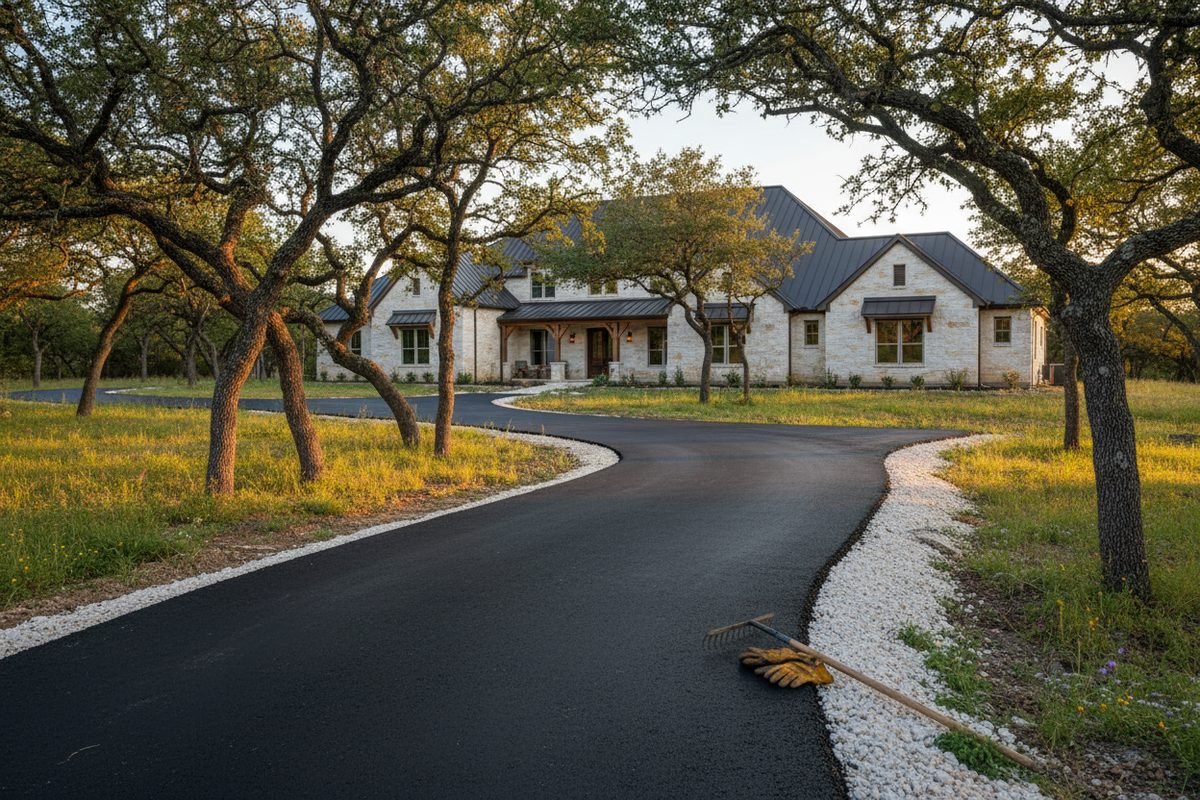
Grading & Leveling, done right for Georgetown ground and heat
Walk any parking lot on Williams Drive the morning after a hard storm and you can read the grading from the puddles. Water standing along a curb line, a birdbath in the drive aisle, a dark stain where the lot never dries. None of that is an asphalt problem. It is a grading problem, and it was built in before the first load of hot mix arrived. TXST Paving Company grades and levels sites across Georgetown so the water has somewhere to go, and we build the base on top of that grade so the pavement stays dry underneath.
Grading is the last thing that happens to the dirt before base rock goes down. It sets the slopes, the elevations, the crown on a drive and the flat tolerance on an accessible parking space. Get it right and the pavement lasts. Get it wrong and no amount of sealcoating will save it. We do this work for driveways, parking lots, ranch roads and building pads from Round Rock and Pflugerville up to Jarrell.
All our excavating services
- Excavation Services: Cut, fill and haul off for pads, drives and lots, with the clay and caliche handled correctly.
- Site Clearing: Brush, cedar, stumps and old pavement cleared so your site is ready for base and paving.
- Grading & Leveling: Rough and fine grading for positive drainage, the step that decides how long your pavement lasts.
Grading & Leveling in Georgetown, explained
What Bad Grading Looks Like in Georgetown
These are the symptoms we see on lots and drives around Williamson County that were graded poorly or not at all:
On the Blackland clay east of I-35, in Teravista and Hutto, standing water is doubly bad. It soaks into the clay, the clay swells and the pavement heaves. Then the drought comes and it shrinks back. The grade is the first line of defense.
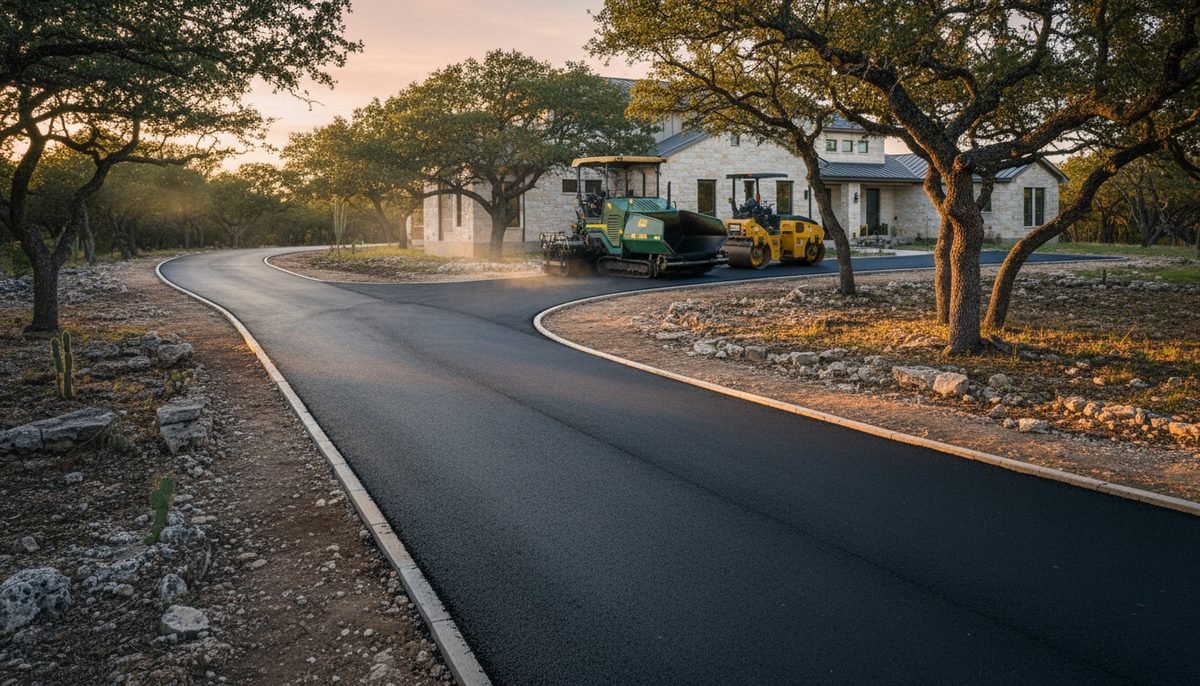 02
Grading and Leveling Services
Rough Grading
After clearing and any cut and fill, rough grading brings the whole site to within a few inches of design elevation.
Fine Grading
Fine grading brings the subgrade to final elevation and slope, usually within half an inch.
Drainage Grading and Swales
Every site needs a way out for water. We shape swales along property lines, bar ditches beside ranch drives, and gentle channels across lots that carry runoff to a culvert, an inlet or a detention area. The goal is positive drainage: every square foot of the pavement has a downhill direction.
Crown and Cross Slope
Driveways and private roads get a crown so water runs to both edges. Parking lots get a cross slope toward inlets or the low side. On long ranch roads off SH 29 the crown and the bar ditches are the difference between a road that lasts and one that washes every spring.
Laser Grading
For building pads, large lots and anywhere the tolerance is tight, we grade with a laser or GPS system. The blade follows the plan and holds a pad flat to a fraction of an inch.
Proof Rolling and Base Rock Lifts
Before base goes down, a loaded truck rolls the subgrade. Anywhere it deflects or pumps, we dig it out and fix it. Then crushed limestone flexible base is spread in 4 to 6 inch lifts, watered, and compacted with a vibratory roller until it is tight, lift by lift, to the thickness on the estimate.
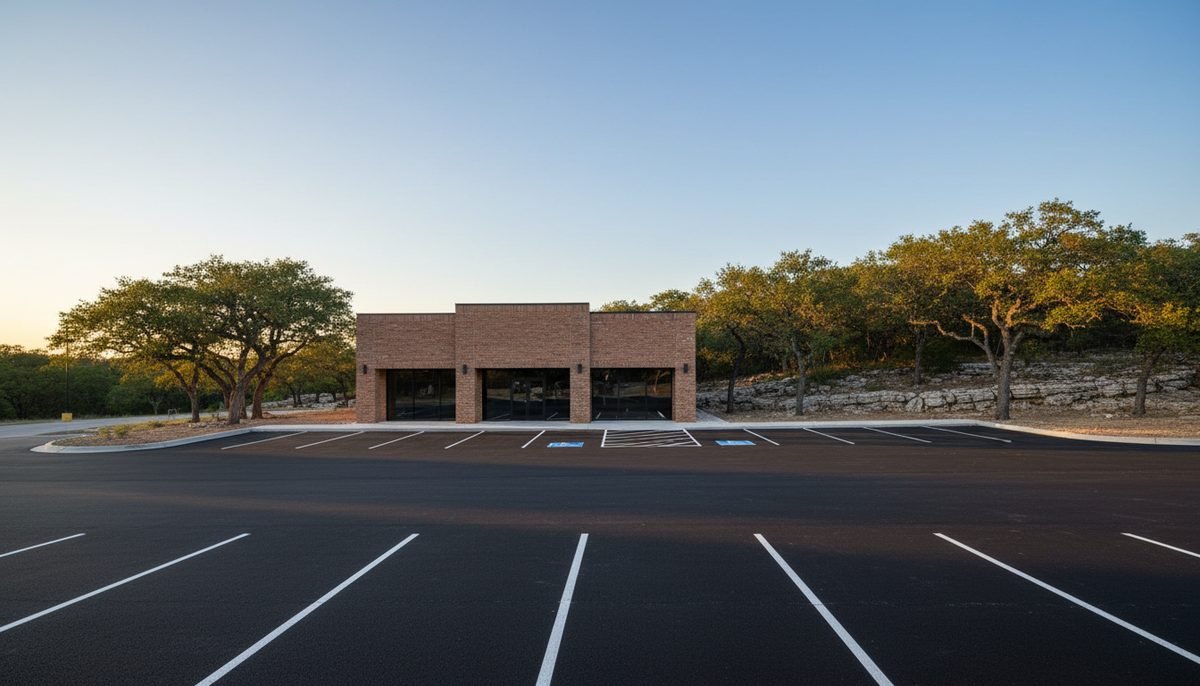 03
Slopes That Work in Central Texas
Asphalt does not need much fall to drain, but it needs some, and it needs it everywhere. These are the targets we grade to on most Georgetown jobs.
Parking lots get a minimum of 1 percent fall, and we prefer 1.5 to 2 percent. Driveways get a 2 to 3 percent crown, or a 2 percent cross slope if they run along a building. Ranch roads get a stronger crown and bar ditches that drop steadily toward the nearest creek or culvert, because storms here dump a lot of water in a short time.
Accessible parking spaces and access aisles are the exception. Under TAS and the ADA they cannot slope more than 1:48 (about 2 percent) in any direction, so we laser grade those areas nearly flat and drain them at the edges. Ramps and routes have their own limits, and our handicap ramp installation page covers those.
Around buildings, the ground should fall away from the slab for at least the first several feet. On the clay side of the county that also keeps water from soaking in beside the foundation and swelling the soil under it.
How We Grade a Site
Grading Targets by Surface
Different surfaces need different slopes and different levels of precision. This is what we build to on typical projects.
| Surface | Target slope | Tolerance | Usual method |
|---|---|---|---|
| Commercial parking lot | 1.5 to 2 percent toward inlets or low edge | Plus or minus half an inch on subgrade and base | Motor grader, GPS on larger lots |
| Accessible spaces and aisles | Under 2 percent in every direction (TAS 1:48) | Tight, checked with a smart level before paving | Laser grading |
| Residential driveway | 2 to 3 percent crown or cross slope, fall away from the garage | Plus or minus half an inch | Skid steer grading box or small grader |
| Ranch road or private drive | 3 to 4 percent crown, bar ditches each side | Plus or minus an inch | Motor grader |
| Building pad | Flat, at plan elevation, ground falling away at the edges | Fraction of an inch across the pad | Laser or GPS dozer |
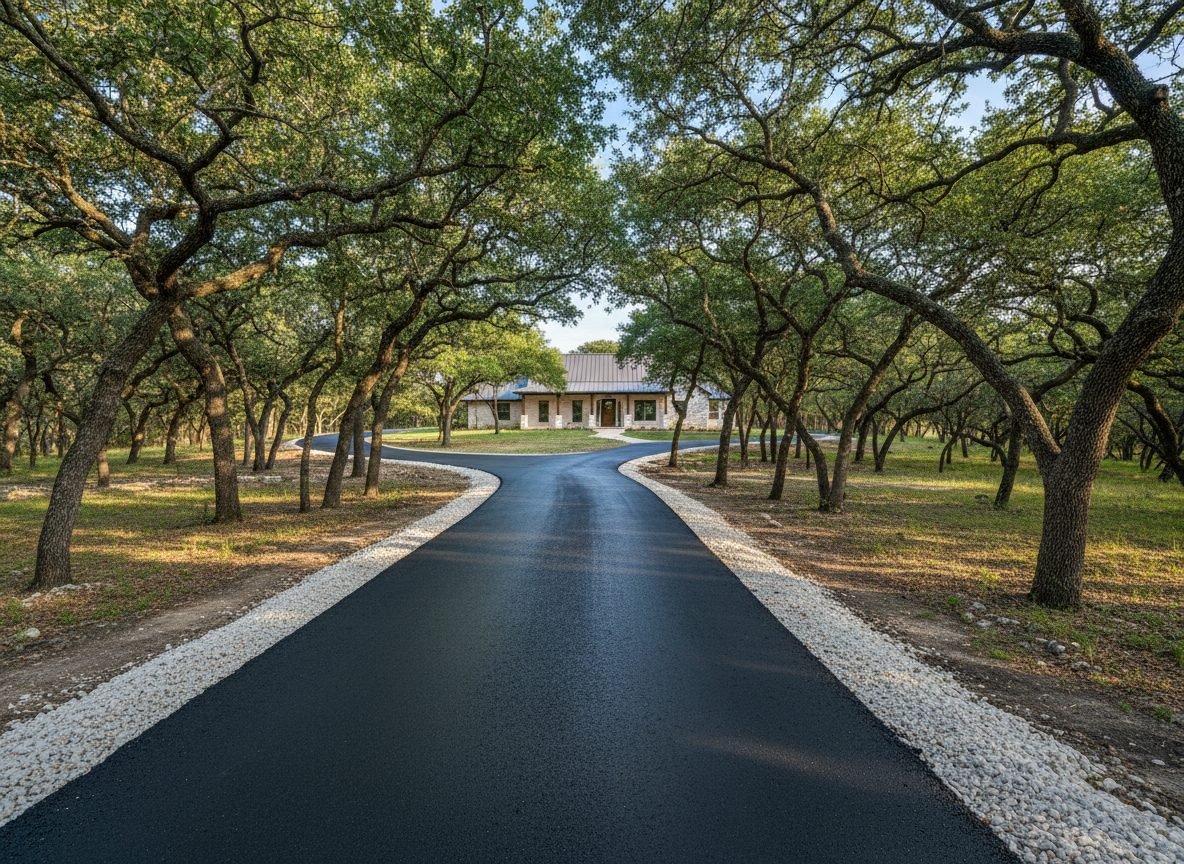 06
After Grading: Base, Pavement and Where We Work
Grading usually sits in the middle of a larger job. Site clearing and excavation come before it when brush, old pavement or bulk cut and fill are involved. After the base is compacted, our crews move straight into parking lot paving, driveway paving or concrete flatwork. If an existing lot only has drainage trouble in a few spots, regrading the base there and patching may be all it needs. The whole sequence is on our excavating contractor page.
We grade and level across Georgetown, including Sun City, Wolf Ranch, Old Town, Berry Creek, Serenada, Teravista, Rancho Sienna, Santa Rita Ranch and the Westinghouse Rd corridor, and around Williamson County in Round Rock, Cedar Park, Leander, Hutto, Pflugerville, Taylor, Liberty Hill, Jarrell, Salado and north Austin.
From first call to finished surface
No mystery and no pressure. You know the scope and the price before a single truck shows up.
Call or text
Reach us at (737) 403-8619 and tell us what you have, a driveway, a parking lot or a private road.
On site measurement
We walk the pavement, measure it, check drainage and base condition and take photos of the problem areas.
Written estimate
You get a clear written estimate with options, usually within a day or two of the visit, free of charge.
The work
Our crew shows up when scheduled, does the job, explains cure times and leaves the site clean.
“As a Realtor serving the Georgetown area, I'm careful about recommending local companies to my clients. TXST Paving has consistently been responsive, professional, and dependable, making the entire process straightforward from the initial conversation through completion.”
“I recently used TXST Paving Company for patching and sealing my driveway. They did a really good job. It makes my customers feel safe getting into my shop. Thank you to the team for working hard even on the holiday!”
“I've used Texas State Paving for the last several years, and each time expectations were met. Great company!”
Grading & Leveling in Georgetown: your questions answered
How much slope does an asphalt parking lot need to drain?
A minimum of 1 percent, and we prefer 1.5 to 2 percent because a lot built at the bare minimum develops birdbaths as soon as it settles a little. The exception is accessible parking, where TAS and the ADA limit the slope to 1:48, about 2 percent, in every direction. We laser grade those areas and drain them at the edges so they stay both flat and dry.
Can you fix drainage on an existing parking lot without repaving it all?
Often, yes. If the problem is a few low spots, we can mill or remove the asphalt in those areas, regrade and recompact the base to drain, and patch. If the whole lot is flat or pitched the wrong way, the fix is to regrade and repave. We shoot the grades first and tell you which situation you have before you spend anything.
What is proof rolling and why do you do it?
Proof rolling is driving a loaded truck slowly over the finished subgrade and watching for spots that deflect, pump or rut. Those are soft areas that would fail under the pavement later. We dig them out, replace or dry the material, recompact and roll again. It takes an hour and catches problems that would cost far more to fix after paving.
How thick should the base be under a driveway or lot in Georgetown?
For a residential driveway on decent ground, 6 to 8 inches of compacted flexible base is typical. Commercial lots with truck traffic go to 8 to 12 inches, and on heavy Blackland clay we may add lime treatment of the subgrade under that. Rock sites west of I-35 sometimes need less. The estimate lists the thickness we are quoting for your site so you can compare bids properly.
Do you grade gravel driveways and ranch roads, or only sites that will be paved?
Both. A lot of ranch drives and RV yards around Georgetown, Liberty Hill and Jarrell stay as compacted base with no asphalt on top. We grade them with a crown, cut bar ditches, and compact the base in lifts so it holds up as the wearing surface. If you decide to chip seal or pave later, the grade and base are already right.
Work that pairs well with grading & leveling
01Excavation Services
Cut, fill and haul off for pads, drives and lots, with the clay and caliche handled correctly.
Learn more 02
Site Clearing
Brush, cedar, stumps and old pavement cleared so your site is ready for base and paving.
Learn more03Asphalt Paving
New hot mix asphalt for driveways, lots and private roads, built on compacted base that handles Williamson County clay.
Learn more
Want a straight answer on grading & leveling?
Call or text and we will come out, measure and put a fair price in writing.