
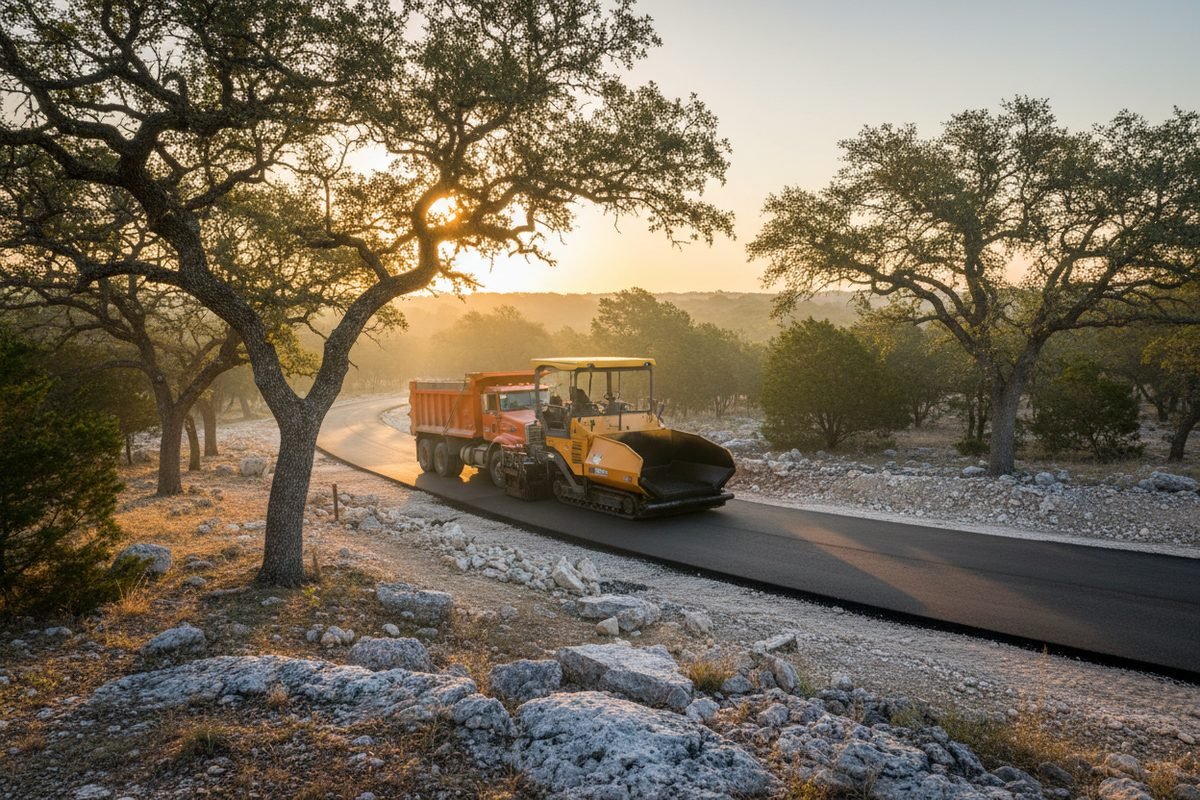
Site Clearing in Georgetown, TX
Brush, trees, stumps, old asphalt and concrete cleared and hauled so the ground is ready for grading and base.
Get a free estimate
Tell us what the pavement is doing. We call back the same business day.
Site Clearing, done right for Georgetown ground and heat
Drive Ronald Reagan Blvd north of Georgetown and you will see what most raw land here looks like: a wall of cedar with mesquite scattered through it, an old fence line grown into the brush, and somewhere under all of it, a slab from a barn nobody remembers. Before anyone can grade a pad or pave a drive, that has to come out. TXST Paving Company clears sites like that, from a single lot in Old Town Georgetown to acreage on the edge of Liberty Hill and Jarrell.
Clearing is the first step in our site work, and it sets up everything after it. Roots left in the ground rot and leave voids under a driveway. We take it out properly, haul it, and hand the site to our grading crew clean.
All our excavating services
- Excavation Services: Cut, fill and haul off for pads, drives and lots, with the clay and caliche handled correctly.
- Site Clearing: Brush, cedar, stumps and old pavement cleared so your site is ready for base and paving.
- Grading & Leveling: Rough and fine grading for positive drainage, the step that decides how long your pavement lasts.
Site Clearing in Georgetown, explained
What Usually Stands Between You and a Paved Lot
Around Georgetown, the clearing work on a site tends to be one of these:
On commercial redevelopment along Williams Drive and University Ave, the job is often more demolition than brush. On new tracts along SH 29 it is the other way around.
 02
Site Clearing Services
Brush and Tree Clearing
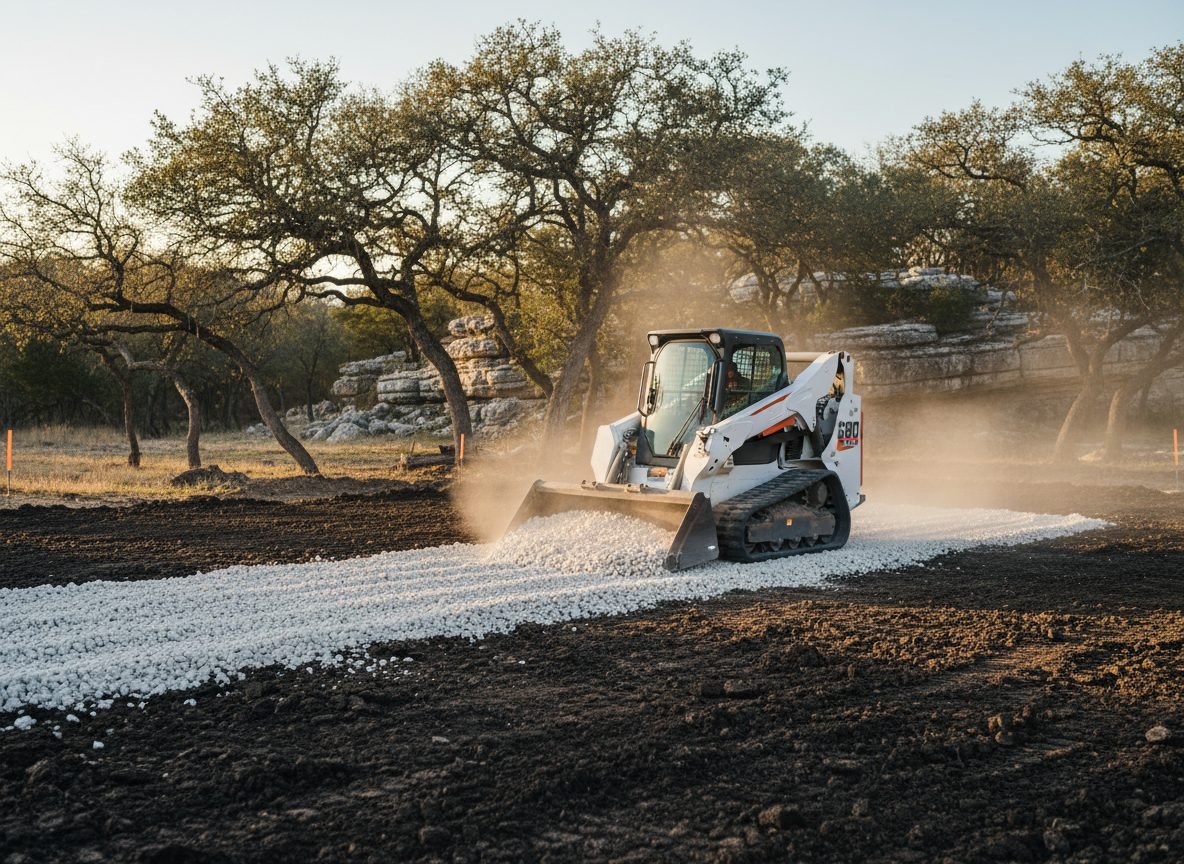
We use a forestry mulcher, dozer or excavator depending on the density and what you want left. Mulching grinds cedar in place and is fast on big tracts. Grubbing with a dozer or excavator pulls the plant and root ball out, which is what we do inside any pavement or pad footprint.
Stump and Root Removal
Stumps in the footprint are pulled or ground below subgrade, and the lateral roots are chased out and removed. The hole is backfilled with compacted material, not loose dirt. Stumps outside the footprint can be ground flush if you would rather not disturb the area.
Old Pavement and Slab Removal
Asphalt is broken and loaded for recycling, or milled and reused as base if it is in decent shape. Concrete slabs are broken with a hammer or breaker, rebar cut, and the pieces hauled to a crusher. We take out the base under the old pavement too if it is contaminated with clay or has failed.
Hauling and Disposal
Brush is chipped or hauled to a green waste site. Concrete and asphalt go to recyclers. Trash and debris go to the landfill.
Erosion Control
A cleared site with bare soil and a Georgetown thunderstorm on the way is a problem. We install silt fence, rock check dams at drainage exits, and a stabilized construction entrance where trucks leave the site, and we keep them in place until the base or pavement is down.
 03
Why Roots and Old Slabs Wreck New Pavement Here
People sometimes ask if we can just pave over the old drive or leave the stumps below grade. Here is why we say no.
Roots decay. A mesquite taproot or a cedar root ball left under a driveway rots over a few years and leaves a void. The base above it settles into the void and the asphalt drops. On Blackland clay east of I-35 the effect is worse, because drought cycles already pull the clay away from the pavement edge, and a rotting root gives the settling a head start.
Old pavement hides failures. If the original driveway cracked because the base under it was thin or the clay under that was moving, an overlay carries the same problem. Reflective cracks come through within a couple of seasons. We evaluate whether an asphalt resurfacing makes sense, and when it does not, we remove it and rebuild.
Slabs trap water. A buried slab is a flat plate that water sits on. The base above it stays saturated, and saturated base does not hold up under a truck or a summer of 100-degree days softening the asphalt.
How We Clear a Site
Clearing Methods Compared
The right method depends on what is on the site and what is going on top of it. This is how we generally match them.
| Method | Best for | What it leaves | Use under pavement? |
|---|---|---|---|
| Forestry mulching | Large cedar and brush tracts, ranch land, areas outside the building footprint | Ground mulch on the surface, roots still in the ground | No, roots stay |
| Dozer push and pile | Medium brush and small trees, fast clearing of open ground | Piles to haul or burn where allowed, some roots remain | Only after grubbing |
| Excavator grubbing | Pavement and pad footprints, stumps, mesquite taproots, root balls | Clean soil with roots removed, holes to backfill | Yes |
| Stump grinding | Single trees near structures or where the ground should not be disturbed | Grindings and the root system below | Only outside the footprint |
| Pavement and slab demolition | Old drives, lots, foundations, sidewalks | Exposed subgrade or old base to evaluate | Yes, after base check |
 06
From Cleared Ground to Base
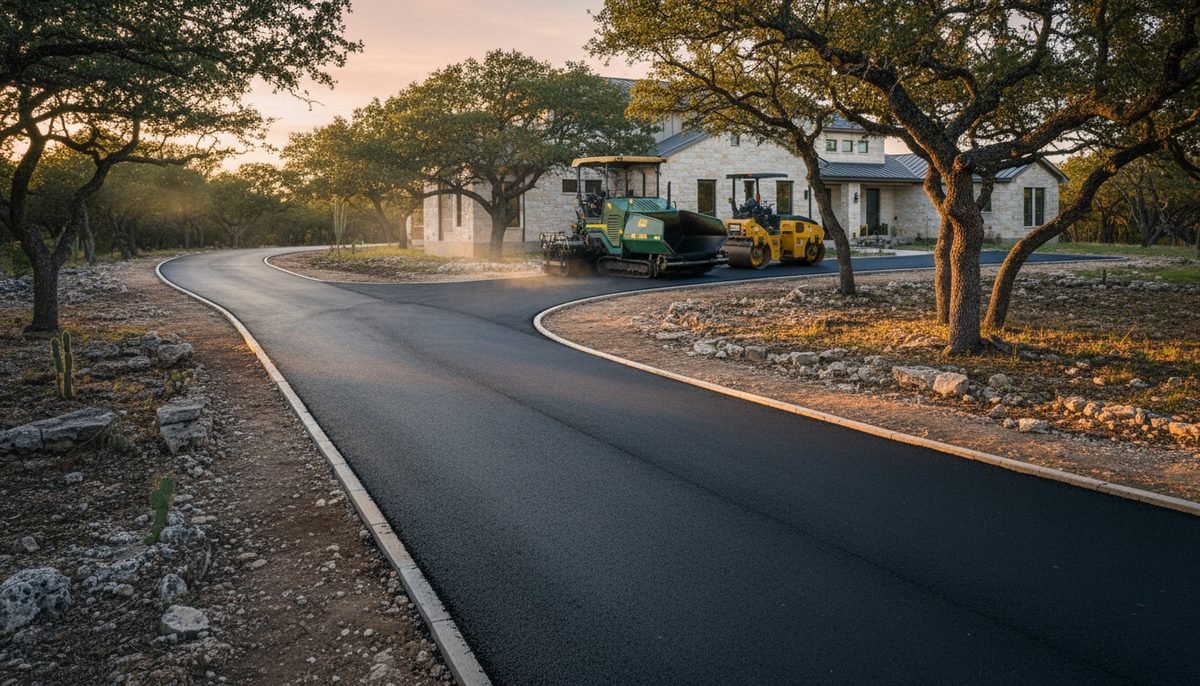
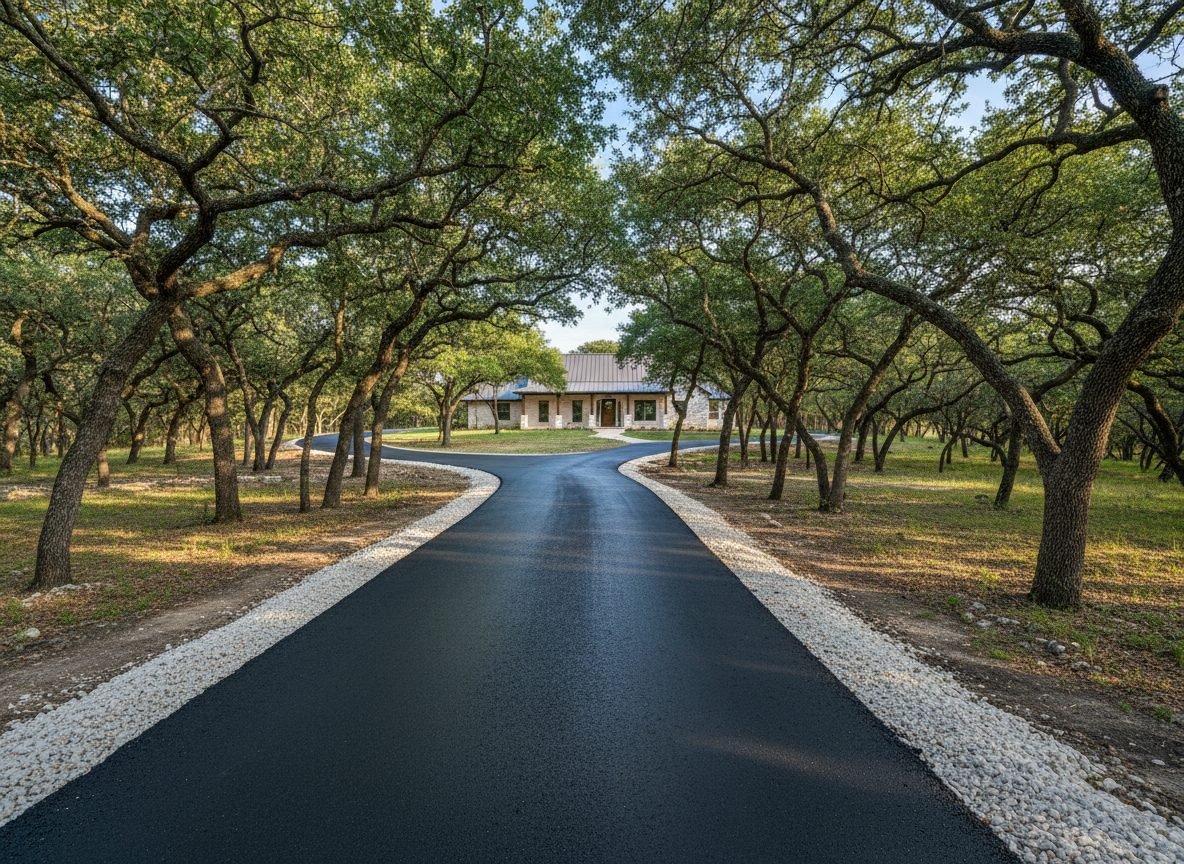
Clearing is the first of three steps in our site work. Once the footprint is clean we move into excavation for any cut and fill the site needs, then grading and leveling to set the slopes and build the base. After that it is asphalt paving, a concrete pour, or a chip seal on a ranch road. The whole chain is on our excavating contractor page.
We clear sites across Georgetown, including Sun City, Wolf Ranch, Berry Creek, Serenada, Rancho Sienna and Santa Rita Ranch, and around Williamson County in Round Rock, Cedar Park, Leander, Hutto, Pflugerville, Taylor, Liberty Hill, Jarrell, Salado and north Austin. Ranch tracts along SH 29 and Ronald Reagan Blvd are a regular part of the schedule.
From first call to finished surface
No mystery and no pressure. You know the scope and the price before a single truck shows up.
Call or text
Reach us at (737) 403-8619 and tell us what you have, a driveway, a parking lot or a private road.
On site measurement
We walk the pavement, measure it, check drainage and base condition and take photos of the problem areas.
Written estimate
You get a clear written estimate with options, usually within a day or two of the visit, free of charge.
The work
Our crew shows up when scheduled, does the job, explains cure times and leaves the site clean.
“As a Realtor serving the Georgetown area, I'm careful about recommending local companies to my clients. TXST Paving has consistently been responsive, professional, and dependable, making the entire process straightforward from the initial conversation through completion.”
“I recently used TXST Paving Company for patching and sealing my driveway. They did a really good job. It makes my customers feel safe getting into my shop. Thank you to the team for working hard even on the holiday!”
“I've used Texas State Paving for the last several years, and each time expectations were met. Great company!”
Site Clearing in Georgetown: your questions answered
Can you clear cedar and mesquite without disturbing the trees I want to keep?
Yes. We walk the site with you first and flag the trees that stay, then work around them. For live oaks and other hardwoods we keep equipment off the root zone as much as the layout allows. Cedar and mesquite that are coming out inside the pavement footprint are grubbed with roots. Outside the footprint we can mulch them in place, which is faster and cheaper.
Do you remove the old driveway or can you pave over it?
It depends on why it failed. If the old asphalt is cracked but the base under it is sound, an overlay can work and we will say so. If the base has failed, the clay under it is moving, or there is a buried slab or roots, paving over it just moves the problem up a layer. We break it out, check the subgrade, and rebuild. The estimate tells you which one we recommend and why.
What do you do with the brush, concrete and asphalt?
Brush is chipped on site or hauled to a green waste facility. Asphalt goes to a recycler and comes back as millings and new mix. Concrete is hauled to a crusher and turned into base. Metal from rebar and fencing is scrapped. Actual trash goes to the landfill. Sorting it keeps your hauling cost down, and we list the expected number of loads in the estimate.
Do I need a permit to clear land in Georgetown?
Inside the Georgetown city limits, removing protected trees and demolishing structures generally needs a permit, and commercial sites need erosion control in place before clearing. In the county and on rural tracts the rules are lighter. We tell you what applies when we look at the property and handle the erosion control either way, because a bare site and a Central Texas storm is a mess nobody wants.
How long does site clearing take?
A residential lot with a few trees and an old driveway is usually one or two days. A brushy acre of cedar can be mulched in a day but grubbing the footprint and hauling adds time. Commercial demolition with slabs and old parking lots runs several days to a couple of weeks depending on how much has to be broken and hauled. We give you a schedule with the written estimate.
Work that pairs well with site clearing
01Excavation Services
Cut, fill and haul off for pads, drives and lots, with the clay and caliche handled correctly.
Learn more02Grading & Leveling
Rough and fine grading for positive drainage, the step that decides how long your pavement lasts.
Learn more03Asphalt Paving
New hot mix asphalt for driveways, lots and private roads, built on compacted base that handles Williamson County clay.
Learn more
Want a straight answer on site clearing?
Call or text and we will come out, measure and put a fair price in writing.