
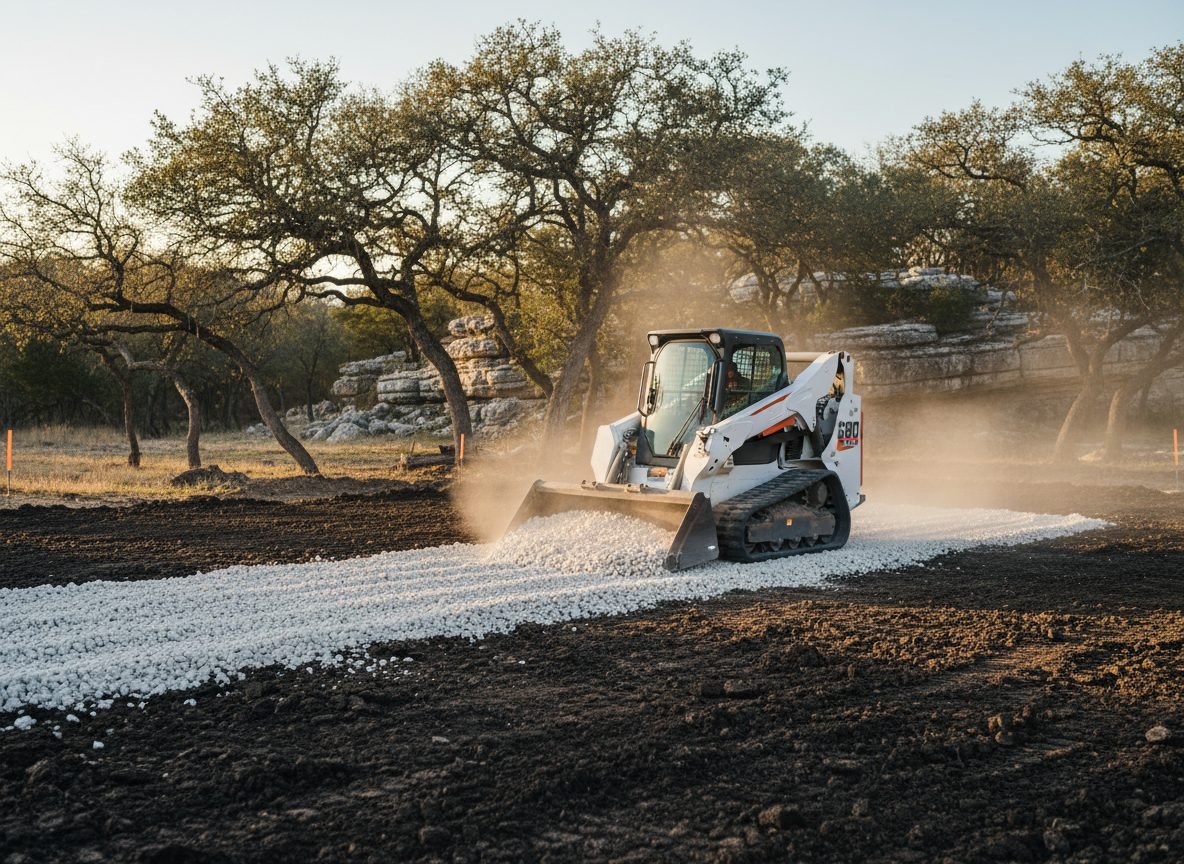
Excavation Services in Georgetown, TX
Cut, fill, haul off, building pads and drive corridors, dug by the same licensed and insured crew that will grade and pave the site when the dirt is done.
Get a free estimate
Tell us what the pavement is doing. We call back the same business day.
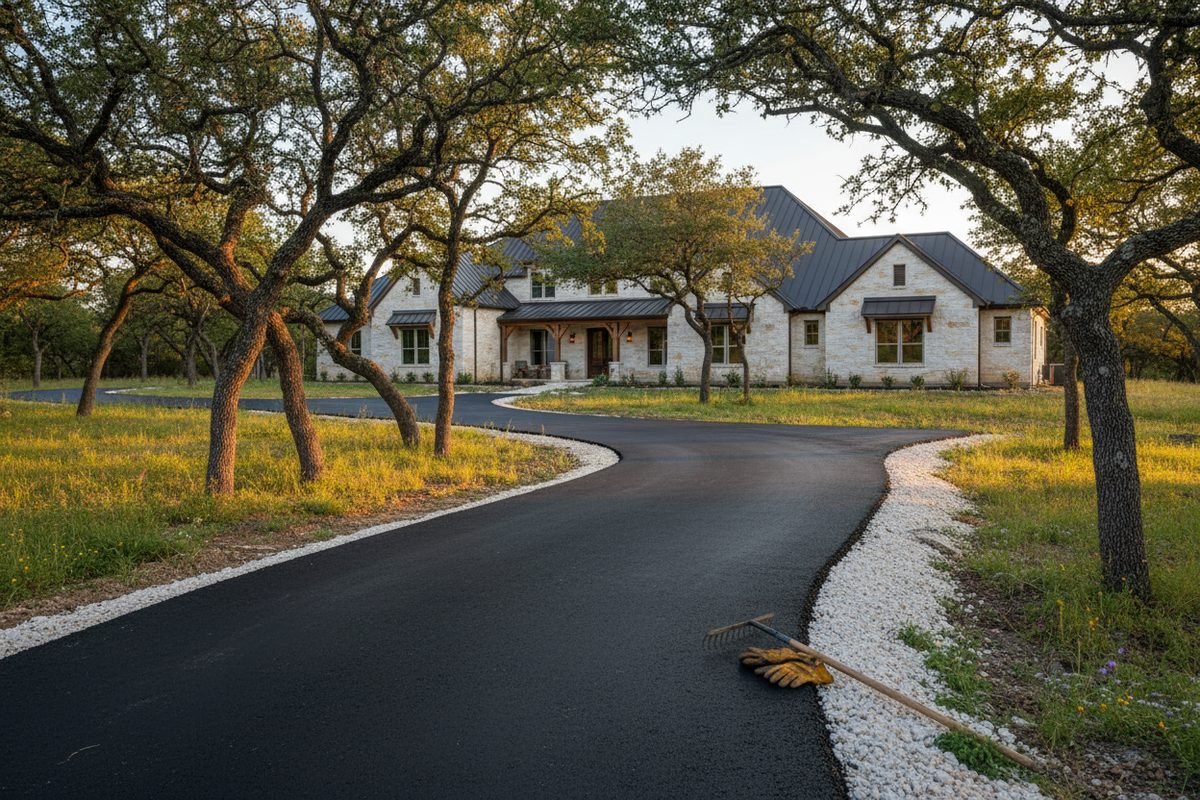
Excavation Services, done right for Georgetown ground and heat
A shop owner off Westinghouse Rd called us last spring with a familiar problem. He had a flat-looking acre, a metal building on order, and a delivery date. What he did not have was a pad, a drive that a semi could turn into, or any idea that the ground under the grass was three feet of black clay over a lens of soft caliche. TXST Paving Company excavates sites like that every week around Georgetown, and the job is a lot more than scraping the topsoil off and calling it level.
Excavation is where the ground gets changed on purpose. We cut what is too high, fill what is too low, get rid of soil that should not be under a pavement, and trench for the drainage that keeps the finished work dry. Our crews run out of E University Ave and cover Williamson County from Round Rock and Hutto up to Jarrell and Salado.
All our excavating services
- Excavation Services: Cut, fill and haul off for pads, drives and lots, with the clay and caliche handled correctly.
- Site Clearing: Brush, cedar, stumps and old pavement cleared so your site is ready for base and paving.
- Grading & Leveling: Rough and fine grading for positive drainage, the step that decides how long your pavement lasts.
Excavation Services in Georgetown, explained
When a Georgetown Property Needs Excavation
Not every paving job needs an excavator. A driveway overlay does not. But you are in excavation territory when any of these are true:
In Georgetown we see this most on new tracts along Ronald Reagan Blvd and SH 29, on infill lots in Old Town, and on commercial pads along SH 130 toward Hutto.
 02
Excavation Services We Provide
Cut and Fill
We survey the site, set grade stakes, and cut the high ground down to design elevation. That material gets moved to the low areas, spread in 6 to 8 inch loose lifts, watered or dried to the right moisture, and compacted with a sheepsfoot or vibratory roller before the next lift goes on.
Haul Off and Import
When the cut and fill do not balance, spoil goes out on our trucks and select fill or flexible base comes in. We quote haul off by the load and tell you up front how many we expect, because trucking is where excavation budgets go sideways.
Building Pads
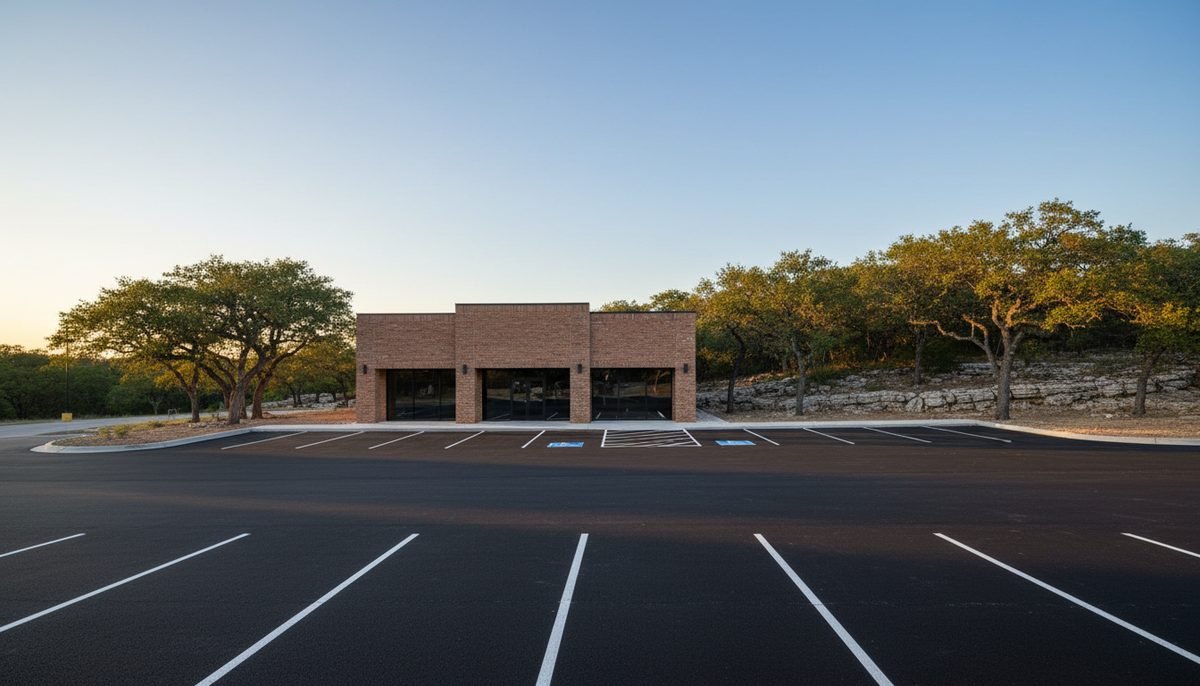
Pads for shops, barns and metal buildings get stripped of topsoil, benched into the slope if there is one, built up in compacted lifts of select fill, and laser graded to the pad elevation on the plans.
Drive Corridors
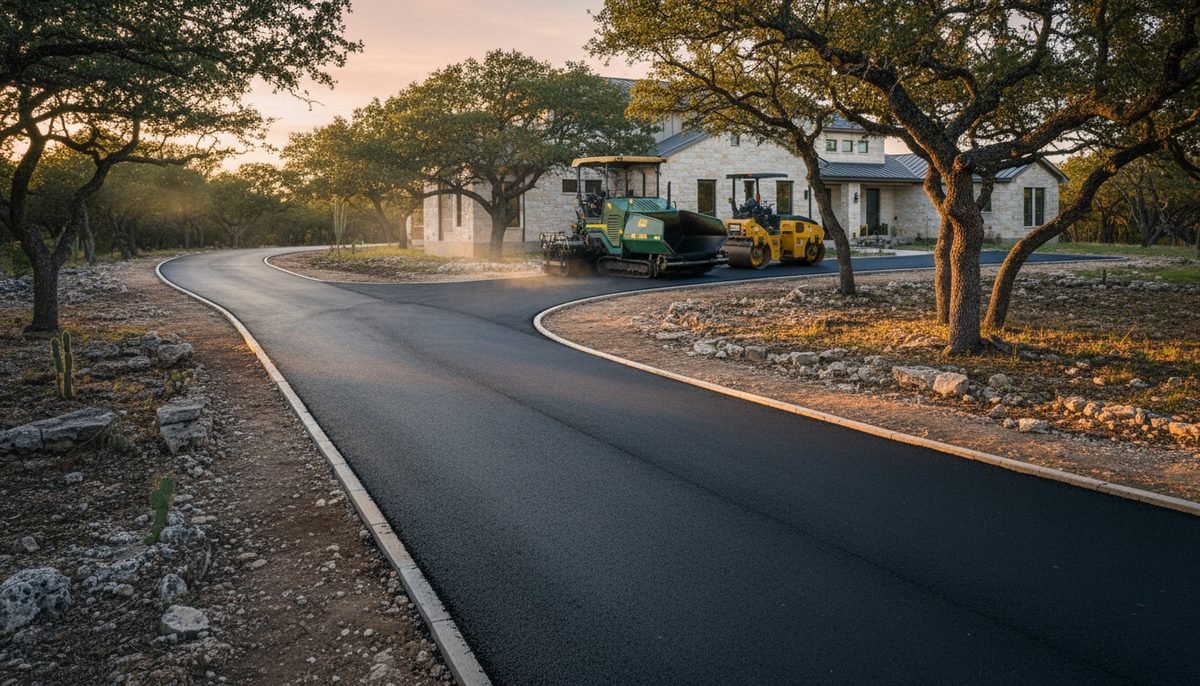
The corridor from the road to the pad is cut and shaped as one continuous piece: bar ditch crossing, culvert, headwalls, subgrade and base, all with a crown so the drive sheds water instead of carrying it to the building.
Utility Locates and Trenching
Every excavation starts with a Texas 811 ticket. Gas, electric, water, fiber and cable get marked before a bucket goes in the ground. We also trench for drainage pipe, French drains and sleeves under the pavement.
Most of these tie straight into our grading and leveling work and then into asphalt paving or a concrete pour.
 03
Digging Clay Versus Limestone and Caliche
The single biggest variable in an excavation estimate around Georgetown is what the ground is made of, and that changes within a couple of miles.
Blackland clay east of I-35, out through Teravista, Hutto and Taylor, cuts easily when it is at the right moisture and fights you when it is not. The real issue is what it does after we leave: it swells when it rains and shrinks in a drought, so a pad or drive built straight on it moves with the seasons. We cut deeper on clay sites, remove the top 12 to 24 inches of the most active material under the pavement, and often recommend lime treating the subgrade before base goes down.
Limestone and caliche west of I-35, under Sun City, Wolf Ranch, Rancho Sienna and out toward Liberty Hill, is the opposite. It is slow to dig and sometimes needs a hydraulic hammer or ripper on the dozer, so the cut takes longer. But once the pad is on rock it does not move. The catch on rock sites is that water has nowhere to soak in, so the drainage cuts have to be right.
We probe or test cut before we quote a site, so the estimate reflects what is actually there rather than what the grass suggests.
Our Excavation Process
Cut and Fill Options Compared
How the dirt is handled drives both the cost and the long-term performance of the site. These are the three approaches we quote most often.
| Approach | What it means | Best for | Trade-offs |
|---|---|---|---|
| Balanced cut and fill | Site is shaped so the dirt cut from high areas fills the low areas, little or no trucking | Larger tracts with some fall, ranch drives, pads where elevation is flexible | Native clay may not be suitable as fill under pavement without treatment |
| Import select fill | Unsuitable soil is removed or capped and engineered fill is trucked in and compacted in lifts | Building pads, commercial lots on Blackland clay, anything with an engineer's spec | Trucking and material cost, needs compaction testing |
| Export and haul off | Excess or unsuitable material is loaded out to a fill site | Infill lots, demolition sites, cutting a drive into a slope | Paid by the load, and access for trucks has to exist |
 06
Who We Dig For and Where
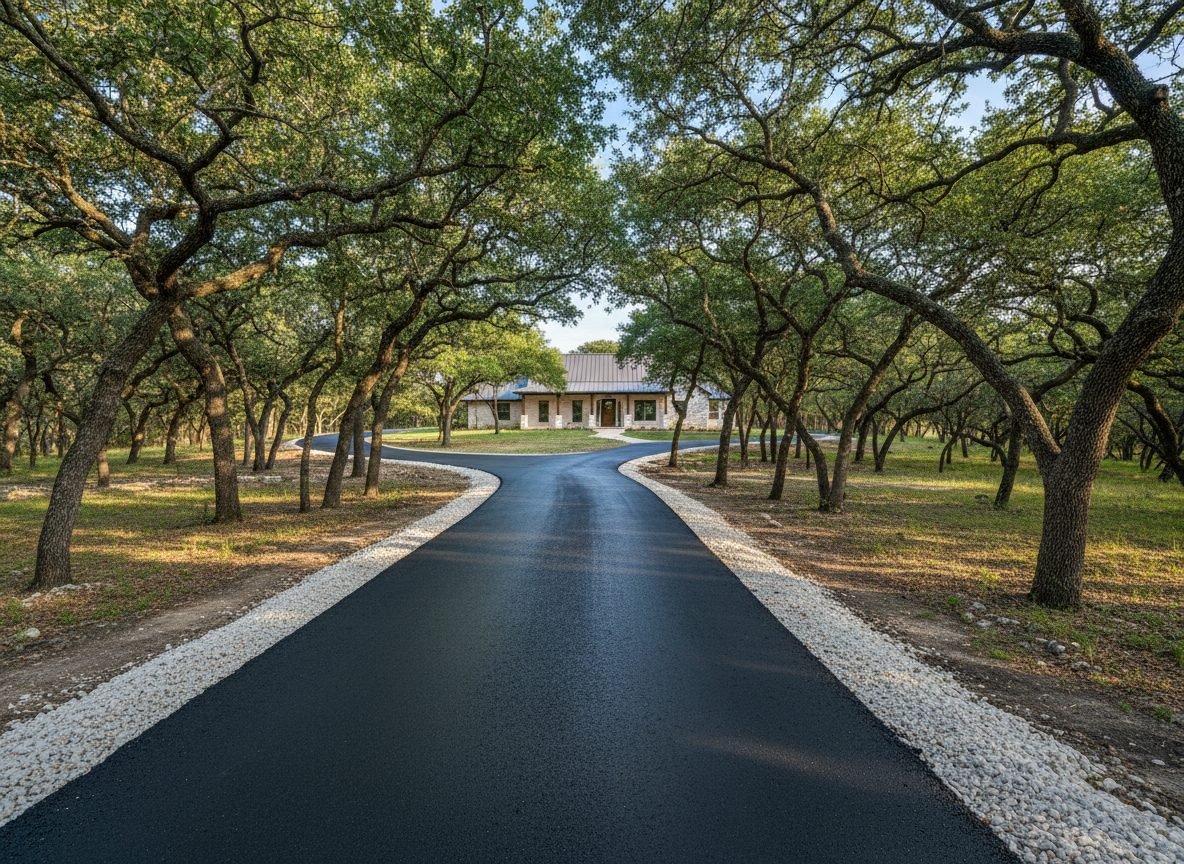
Our excavation customers are mostly people about to pave or pour something: homeowners in Berry Creek and Santa Rita Ranch putting in a long driveway, ranch owners on SH 29 cutting a road to a back pasture, shop owners along Westinghouse Rd building a pad, churches and schools adding parking, and HOAs fixing a drainage problem that has been softening a street for years.
When the excavation is done, the same company handles what comes next: site clearing if brush or old pavement was in the way first, grading and leveling to final elevation, and parking lot or driveway paving on top. The full picture is on our excavating contractor page.
We serve Georgetown, including Sun City, Wolf Ranch, Old Town, Serenada and Teravista, plus Round Rock, Cedar Park, Leander, Hutto, Pflugerville, Taylor, Liberty Hill, Jarrell, Salado and north Austin.
From first call to finished surface
No mystery and no pressure. You know the scope and the price before a single truck shows up.
Call or text
Reach us at (737) 403-8619 and tell us what you have, a driveway, a parking lot or a private road.
On site measurement
We walk the pavement, measure it, check drainage and base condition and take photos of the problem areas.
Written estimate
You get a clear written estimate with options, usually within a day or two of the visit, free of charge.
The work
Our crew shows up when scheduled, does the job, explains cure times and leaves the site clean.
“As a Realtor serving the Georgetown area, I'm careful about recommending local companies to my clients. TXST Paving has consistently been responsive, professional, and dependable, making the entire process straightforward from the initial conversation through completion.”
“I recently used TXST Paving Company for patching and sealing my driveway. They did a really good job. It makes my customers feel safe getting into my shop. Thank you to the team for working hard even on the holiday!”
“I've used Texas State Paving for the last several years, and each time expectations were met. Great company!”
Excavation Services in Georgetown: your questions answered
How much does excavation cost in Georgetown?
It depends on how many cubic yards move, whether the site balances or needs trucking, and what the ground is made of. Rock west of I-35 digs slower than clay east of it, and clay sites often need lime treatment or select fill. Rather than quote a number that will be wrong for your lot, we walk the site and give you a free written estimate with the quantities listed.
Do you call Texas 811 before you dig?
Yes, on every job, including small residential driveways. We submit the ticket, wait the required time for the utilities to mark their lines, and hand dig near the marks. Private lines the utilities do not mark, like a water line from the meter to the house or a sprinkler main, are something we ask you about before we start.
Can you build a pad for a metal building or barn?
Yes. We strip the topsoil, remove or treat unsuitable clay, place select fill in compacted lifts, and laser grade the pad to the elevation on your plans. If your engineer or building supplier specifies compaction testing, we build to that spec and coordinate the testing. We usually oversize the pad so the drive and apron around the building sit on the same fill.
What is the difference between excavation and grading?
Excavation changes the ground in a big way: cutting, filling, removing bad soil and trenching. Grading is the finer shaping that follows, setting the exact slopes and elevations the pavement will be built on. On most jobs we do both. Our grading and leveling page covers the second half.
Can you excavate in the rain or right after a storm?
Cutting can sometimes continue, but fill placement and compaction stop when the soil is too wet, especially on Blackland clay. Compacting wet clay traps water and creates a soft subgrade that will fail under the pavement. We would rather lose a couple of days than build on it. Your estimate includes a schedule, and we keep you updated when Central Texas weather moves it.
Work that pairs well with excavation services
 01
Site Clearing
Brush, cedar, stumps and old pavement cleared so your site is ready for base and paving.
Learn more02Grading & Leveling
Rough and fine grading for positive drainage, the step that decides how long your pavement lasts.
Learn more03Asphalt Paving
New hot mix asphalt for driveways, lots and private roads, built on compacted base that handles Williamson County clay.
Learn more
Want a straight answer on excavation services?
Call or text and we will come out, measure and put a fair price in writing.